2026 results: The International Microbiota Observatory 4th edition
For the fourth year running, the Biocodex Microbiota Institute has commissioned Ipsos to carry out a major international survey among 7,500 people in 11 countries. The challenge: to better understand people's knowledge and behavior towards their microbiota.
Awareness of the term "microbiota" keeps rising but real understanding, protective behaviors, and HCP-led education are all falling short. The data points to a clear imperative: moving from awareness to action.
Understand it. Act on it.
- 1. Knowledge of microbiota is growing at different rates
- 2. Microbiota awareness is rising faster than understanding
- 3. Knowing about microbiota is not enough to adopt good behaviors
- 4. HCPs remain the cornerstone of microbiota education
- 5. There are windows of opportunity to talk about microbiota
- Scientific committee
- Methodology
1. Knowledge of microbiota is growing at different rates
The 2026 survey results reveal that seven in ten people now know the word "microbiota". That is a real cultural achievement. Four editions in, and what was once a specialist term is entering everyday health vocabulary across countries, across generations, and across languages.
Moreover, the shift goes further than a single word. Awareness is no longer confined to the gut. People are increasingly recognizing that the microbiota are in multiple places of the body, and that each one matters.
Awareness is rising across all microbiota
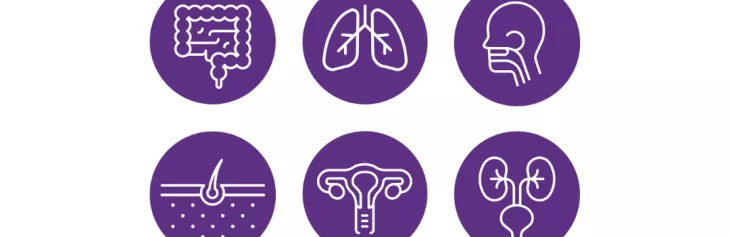
Awareness has grown for every specific microbiota compared to 2025. The gut leads, but the others are catching up.
7 in 10 of those surveyed had already heard of the term "microbiota"...
(+9 points vs. 2023)
But only 1 in 5 of claimed to know exactly what the term "microbiota" meant.
(+1 point vs. 2025)
1 in 3 people had ever heard of each specific microbiota (gut, vaginal, skin…)
(+6 points vs. 2023)
Good to know
The microbiota is made up of trillions of microorganisms living in and on the body (such as bacteria, fungi, etc.). It plays a key role in digestion, immunity, and much more. Any imbalance is referred to as dysbiosis.
how well do we know it?
63% of those surveyed said they have heard of the gut microbiota.
+6 points vs. 2025
Learn more about the gut microbiota...
52% of those surveyed said they have heard of the oral microbiota.
+4 points vs. 2025
Learn more about the oral microbiota...
51% of those surveyed said they have heard of the vaginal microbiota.
+2 points vs. 2025
Learn more about the vaginal microbiota...
50% of those surveyed said they have heard of the skin microbiota.
+4 points vs. 2025
Learn more about the skin microbiota...
46% of those surveyed said they have heard of the urinary microbiota.
+3 points vs. 2025
Learn more about the urinary microbiota...
44% of those surveyed said they have heard of the urinary microbiota.
+3 points vs. 2025
Learn more about the lung microbiota...
Knowledge of microbiota is spreading at different speeds
How much people know about microbiota is growing everywhere, but the pace varies significantly. For instance:
- In Vietnam, 93% have heard of the microbiota, the highest rate globally;
- 2 in 3 respondents from the USA said the have heard of the microbiota. That's a +14 pts increase since 2023, the strongest progression of any country in the study;
- Finland sits at 52%, up +11 pts since 2024, but still the lowest in the study.

2. Microbiota awareness is rising faster than understanding
Here is where the picture changes. Knowing the word "microbiota" is not the same as understanding what the microbiota actually does. When respondents are asked not about recognition, but about mechanisms (how the microbiota functions, what it influences, what it is linked to) the gaps are striking.
Only 24% of respondents know exactly what the microbiota is. But the real measure of that gap is not this single number, it is what people believe, or fail to believe, about specific roles and connections.
Only 1 in 2 people knew that the microbiota is not located exclusively in the gut
(-4 points vs. 2025)
of survey respondents were aware that the microbiota can influence cancer therapy response
(new item in 2026)
Fewer than 1 in 4 said they knew respiratory allergies could be linked to gut microbiome imbalance
(-8 points vs. 2025)
Awareness of these topics is relevant to everyday health decisions and to the conversation people should be having with their doctors.
Microbiota understanding remains surface-level
Some core associations are now widely understood, these are the entry points for deeper education. Beyond these general associations, understanding drops sharply. The gut-brain axis, the link with respiratory allergies, the influence on cancer treatments, these remain largely unknown.

71% of people seemed aware of antibiotics' impact on the microbiota. In contrast, only 40% said to know that the gut communicates essential information
to the brain.
The implication is clear: awareness campaigns have done their job on recognition. The next frontier is mechanistic understanding, helping people grasp not just that the microbiota exists, but what it does, how it is disrupted, and why that matters for their health.

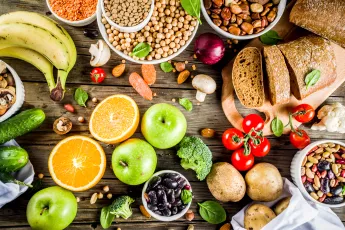
How to keep a healthy microbiota?
Learn more
What women know(and don't know) about their vaginal microbiota
Discover more
3. Knowing about microbiota is not enough to adopt good behaviors for it
One of the defining findings of this edition is the gap between growing awareness and stagnating, even declining, protective behaviors. The microbiota is better known, but the everyday gestures needed to protect its balance are not yet instinctive. Knowledge is a necessary first step. It is not sufficient.
Almost half of those surveyed said they have not changed their behavior at all or not really
(+3 points vs. 2025)
of people said they believed their gut microbiome was well balanced at the time
(new item in 2026)

About 3 in 4 people surveyed also said they engage in physical activity (73%) and 2 in 3 said they consume fermented foods, such as yogurt, kefir, and sourdough bread, to limit the risk of microbiota imbalance.
Compared to 2025, virtually the same amount of people claimed to consume probiotics (49%), and prebiotics (41%) for their microbiota.
Do people adopt harmful habits for their microbiota unconsciously?
Over half say they wash their bodies several times a day (53%), which may cause dysbiosis, and 38% of women take vaginal showers, even though this is harmful to their vaginal microbiota.

Have you heard of "dysbiosis"?
Find out moreWho is more likely to act in order to protect their microbiota?
Parents of young children and people with at least one health problem are the most likely to have changed their behaviors (respectively 64% and 57%). Among the general population, the gap between those who know and those who act is still significant.
When it comes to the regions in the survey, Asia leads on action, followed by Latin America and, then, Europe. In Vietnam, 85% report having changed their behaviors. In France, only 38% say the same. The gap is not primarily about knowledge, it is about how health information is translated into daily practice.

Gut microbiota: our immune system’s best friend
Learn more
4. Healthcare professional remain the cornerstone of microbiota education
Their credibility is unmatched: nearly universal trust, across all countries and all population groups. Yet this edition reveals a troubling paradox: while trust holds, the information patients actually receive from their HCP is declining.
of people cited HCPs as their most trusted source of information on the microbiota
(stable vs. 2025)
of survey respondents had received information about the microbiota from a healthcare professional at least once
(-5 points vs. 2025)
of people said they had received all key information from their healthcare professional
(-2 points vs. 2025)

“The most trusted channel is also the most underused. 94% of people trust their doctor on microbiota. But only 33% received all the key information. That gap is not a healthcare system failure: it is an opportunity. Every consultation is a chance to close it.”
What fundamentals are still not covered in consultations?
The basics are still largely absent from medical conversations:
- 43% were educated on the importance of preserving microbiome balance;
- 43% received guidance on behaviors to adopt;
- Only 39% received an explanation of what the microbiota is, its roles and functions, the most important topic, and the least addressed.
Where do people learn about the microbiota?
Healthcare professionals rank first by a wide margin. Secondary sources vary by country and age group.
HCPs rank first. Secondary sources vary by country and age group
79% of the overall population see HCPs as the most trusted source and 94% put them in their top 3.
This figure rises to 83% in Europe, but falls to 66% in Asia.
Only 2% of survey participants rank social media personalities as the most reliable source. And only 9% put them in their top 3.
This figure falls to 1% in Europe and Latin America.
Note: The "Other" category is growing (from 19% to 22% in the top 3), likely reflecting AI tools such as ChatGPT. This source will be tracked explicitly in future editions.

5. There are windows of opportunity to educate patients about microbiota
To move from awareness to action, information needs to be delivered at the right moment. The 2026 Observatory identifies three major windows of opportunity where education could have the greatest impact: the antibiotic prescription moment, women's gynecological follow-up, and the first 1,000 days of a child's life.
When prescribing antibiotics
Every antibiotic prescription is a potential microbiota education moment. But in 2026, the information given during this interaction remains insufficient and shows no meaningful improvement.
only 1 in 4 of people said to have received all key microbiota-related information when prescribed antibiotics
(stable vs. 2025)
almost 2 in 5 people had been told by a healthcare professional that taking antibiotics could have negative consequences on the balance of their microbiota
(+4 points vs. 2025)
of respondents claimed to have been prescribed probiotics or prebiotics alongside antibiotics
(new item in 2026)
Almost half of surveyed people being prescribed antibiotics had been told about digestive disorders associated with them. But only 36% received practical advice on limiting the impact antibiotics have on their microbiota.
Antibiotics: their effects on microbiota and our health?
Find out moreWhen women go to gynecological consultations
The vaginal microbiota perfectly illustrates the 2026 paradox: the term is becoming familiar, but real understanding remains limited and the medical dialogue is still incomplete.
of women surveyed had heard of the vaginal microbiota
(+2 points vs. 2025)
but fewer than 1 in 4 knew exactly what the vaginal microbiota is
(stable vs. 2025)
yet the majority of female respondents wanted more information on its impact on their health
(+1 point vs. 2025)
Out of all the women in the survey, only 30% claimed to have received all key information about microbiota from their HCP (a drop of -2 points vs. 2025). What's more, just 1 in 4 said all intimate health-related topics were addressed in consultation.
Knowledge gaps remain significant:
- 79% could not correctly answer whether contraceptive pills could protect the vaginal microbiota;
- 55% did not know that the gut microbiota influences the vaginal microbiota;
- 41% found it difficult to talk about sexual discomfort with their healthcare professional.
Practices that put your vaginal microbiota at risk
Learn moreWhen a baby's microbiota starts to develop
The first 1,000 days of life (from conception to the child's second birthday) represent a critical window for the development of the infant's microbiota. Yet this concept remains poorly understood, even among parents and pregnant women.
Less than half of parents or pregnant women surveyed had heard about the "first 1000 days" concept.
(new item in 2026)
of them knew exactly what the concept means
(new item in 2026)
about 1 in 3 parents had received all key information from their pediatrician
(new item in 2026)
When questioned about the factors influencing their baby's microbiota, parents and pregnant women got less than half of the questions right on average (2.3 out of 6). Meanwhile, 57% of their children had been prescribed probiotics or prebiotics.
What is the difference between prebiotics, probiotics and postbiotics?
Find out moreThese are some key knowledge gaps revealed by the survey:
- 11% of parents knew that the baby's microbiota does not start developing inside the mother's womb;
- 62% of respondents did not link the mode of delivery (vaginal vs. caesarean) to its impact on the newborn's gut microbiota;
- 51% did not know that breastfed babies have a different gut bacteria profile from formula-fed babies.
Explore more results about what parents know (and don’t know) about the microbiota during the first 1,000 days of life below.



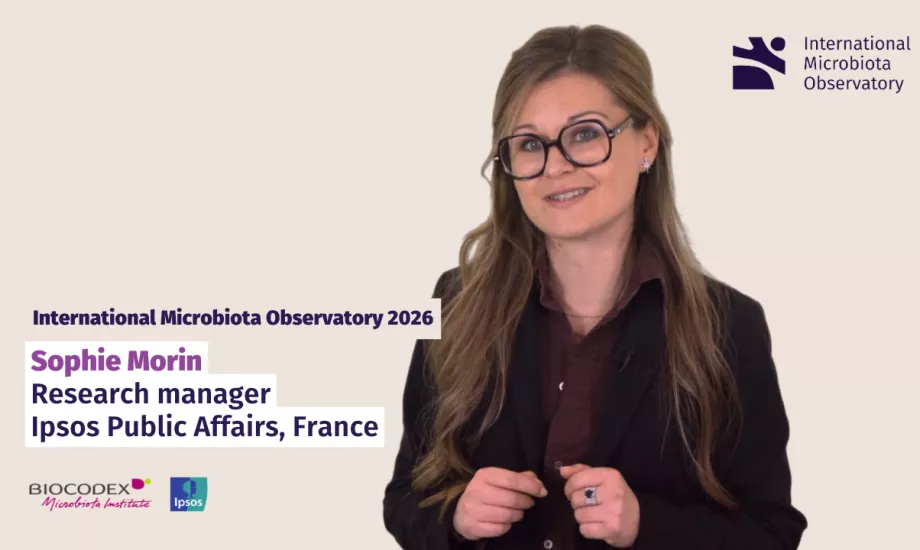
Sophie Morin, Research Manager Ipsos public affairs comments on 2026 results
Scientific committee
Since 2024, a multidisciplinary international scientific committee oversees the Observatory's editorial process, provides critical analysis of results, and promotes its national deployment.
This scientific committee is made up of:

Hanna Stolińska-Fiedorowicz, PhD
Poland
Clinical dietician, lecturer, graduated from the Medical University of Warsaw.
She worked at the Institute of Food and Nutrition for 7 years.
Check her Linkedin profile here.

Joël Doré, PhD
France
Research Director at INRA & Scientific Director of the MetaGenoPolis.
Check his Linkedin profile here.

Purna C. Kashyap, M.B.B.S.
USA
Gastroenterologist, Mayo Clinic College of Medicine.
Check his Linkedin profile here.

Jean-Marc Bohbot, MD, PhD
France
Andrologist, infectious disease specialist, Institut Alfred Fournier.
Check his Linkedin profile here.
Methodology
This fourth edition of the International Microbiota Observatory was conducted by Ipsos on 7,500 individuals across 11 countries (France, Portugal, Poland, Finland, Italy, Germany, the USA, Brazil, Mexico, China, and Vietnam). The countries surveyed are the same as in the previous wave.
The survey was conducted over the Internet between February 3 and Mars 13, 2026. For each country, the sample is representative of the population aged 18 and over in terms of :
- gender
- age
- profession
- region
Representativeness was ensured via quota sampling, the most commonly used sampling method for obtaining a representative sample of the population studied. The quota variables for each country were gender, age, region, and socio-professional category. The data were adjusted:
- within each country, again to ensure that each population is representative
- globally, so that each country has the same weight. Statistical analyses were carried out using Cosi software (M.L.I., France, 1994), with a significance level of 95%
The survey population was 48% male and 52% female. The sample of 7,500 individuals made it possible to carry out a detailed analysis by age group:
- 18-24
- 25-34
- 35-44
- 45-59
- 60 and over
The changes shown are year-over-year, that is, compared to the 3rd edition of the Observatory conducted in 2025. Changes relative to previous editions—the first and second editions—are shown on a constant scope basis, meaning they were calculated by considering only those countries included in all waves of the survey (namely the United States, Brazil, Mexico, France, Portugal, and China). Other countries, which were included in the Observatory’s second or third editions, are not included in the results presented on a constant scope basis.
The questionnaire includes 24 questions on:
- socio-demographic data
- the level of knowledge about microbiomes
- the level of and desire for information from healthcare professionals
- the level of knowledge and information among parents and pregnant women regarding a child’s microbiome
- the identification and adoption of behaviors designed to combat microbiome imbalances
- the level of knowledge, information, and behaviors of women about the vulvo-vaginal microbiome
- health data
The questionnaire lasted ten minutes and the 7,500 individuals had to complete the entire questionnaire in order to be included in the survey. The terms used in the questionnaire to talk about the microbiome have been translated and adapted to the terms used in each country.