2026: What parents know about early microbiota development International Microbiota Observatory
For the fourth consecutive year, the Biocodex Microbiota Institute, in partnership with Ipsos, has conducted the most comprehensive international survey on microbiota knowledge, behaviors, and perceptions: the International Microbiota Observatory. What do parents know about the development of the microbiota during the first 1000 days of life?
This year’s edition includes a dedicated focus on the first 1,000 days of life, presented at the ESPGHAN congress. Among the 7,500 respondents, 3,040 are parents or pregnant women, whose responses form the basis of this specific focus.
The first 1,000 days of life: a critical window for the infant microbiota
From conception to the child’s second birthday, the first 1,000 days of life represent a decisive window for the development of the infant microbiota. The microorganisms that colonize a baby’s gut, skin, and mucous membranes during this period lay the foundations for long-term immune defense, metabolic balance, and health.
Yet the 2026 International Microbiota Observatory reveals that this window remains largely underused. The concept is still barely known by most parents, the information transmitted by healthcare professionals is incomplete, and the gap between clinical prescription and patient education is significant.
1. Parents and pregnant women show widespread recognition and understanding of the term “microbiota”
The survey found out that, on average, parents and pregnant women seemed to be more aware of both the microbiota itself and how microbiota is linked to health. For instance, 4 out of 5 of them had already heard of the term microbiota (vs. 72% of the overall participants). When compared to other respondents, they were more aware that a microbiota imbalance may have significant health consequences (79% vs. 77% globally).
of parents or pregnant women have already heard about
the term “microbiota”
(vs. 72% overall)
4 in 5 of them were aware the diet significantly impacts microbiota balance
(vs. 79% overall)
Learn all about microbiota
Find out more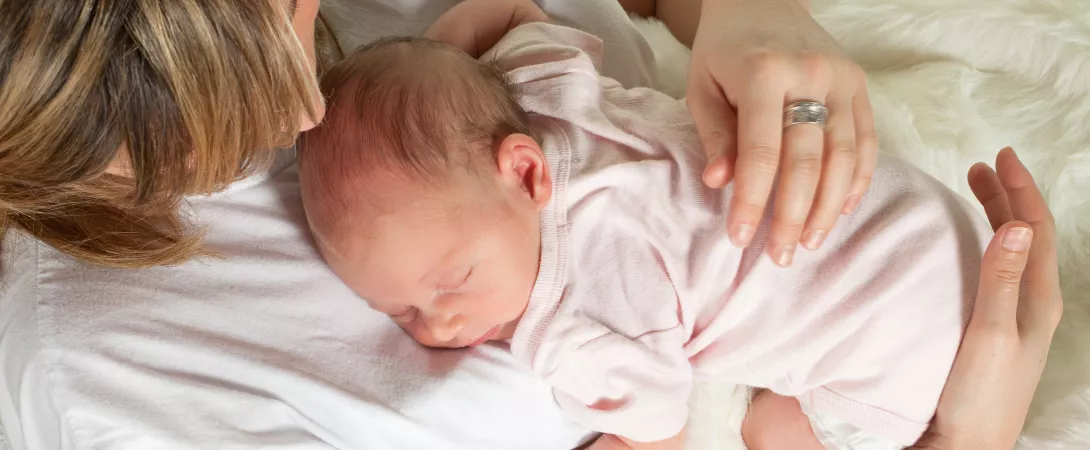
2. Awareness of the “first 1,000 days” and baby microbiota development is limited, though higher among pregnant women
43% of parents had heard of the scientific concept of the first 1,000 days of life, compared to 62% of pregnant women. Pregnancy appears to be a key moment for exposure to this information.
But in almost all cases, knowledge goes no further than the name. Only 15% could say exactly what it means. 28% had heard of it without being able to define it. And 57% had never encountered the concept at all.
less than half of parents surveyed had heard of the "first 1,000 days" concept
(vs. 62% of pregnant women)
about 1 in 8 knew exactly what it means…
A concept that varies significantly by country
Awareness of the first 1,000 days varies widely across the 11 countries surveyed. Asia and the United States lead on this indicator; Europe lags significantly.
- Vietnam leads all nations surveyed with 70% of the population claiming to have heard of the 1000 days concept;
- The United States follows closely at 58%, while China and Mexico sit near the global average of 43%;
- In Poland, slightly more than 1 in 3 respondents (39%) seems to know about the first 1000 days;
- France and Brazil show similar awareness with 37% having heard of it;
- The countries with the lowest rates are Portugal (32%), Finland (19%), and Germany (18%).

Learn more about the microbiota and the first 1,000 days
Learn moreWhat most parents do understand: antibiotics impact on gut microbiota development
One result stands out positively: the impact of early antibiotic use on the infant microbiota is the best-understood item in the questionnaire.
of parents knew that early antibiotic use can significantly impact gut microbiota development
(vs. 72% of pregnant women)
of them knew that breastfed babies have a different gut bacteria profile than formula-fed babies
Antibiotics: what impact on the microbiota and on our health?
Find out moreWhat most parents still do not know
Despite overall low scores, several specific gaps are particularly striking:
- Only 11% of parents knew that the baby's microbiota does not start developing inside the mother's womb (vs. 20% among pregnant women);
- Less then 1 in 3 respondents were aware that the gut microbiota does not become adult-like by age 5 (vs. 40% among pregnant women);
- Just 38% seemed to know that pet exposure during early life influences the gut microbiota;
- Similarly, 38% of respondents linked the mode of delivery (vaginal vs. caesarean) to its impact on the newborn's gut microbiota.
Many parents are aware of the association between antibiotic use and alterations in the microbiota. They do not know when the microbiota begins, or what shapes it in the womb, at birth, and in the first years of life. That is the education gap to close.

At nursery, babies also build up their gut microbiota
Learn more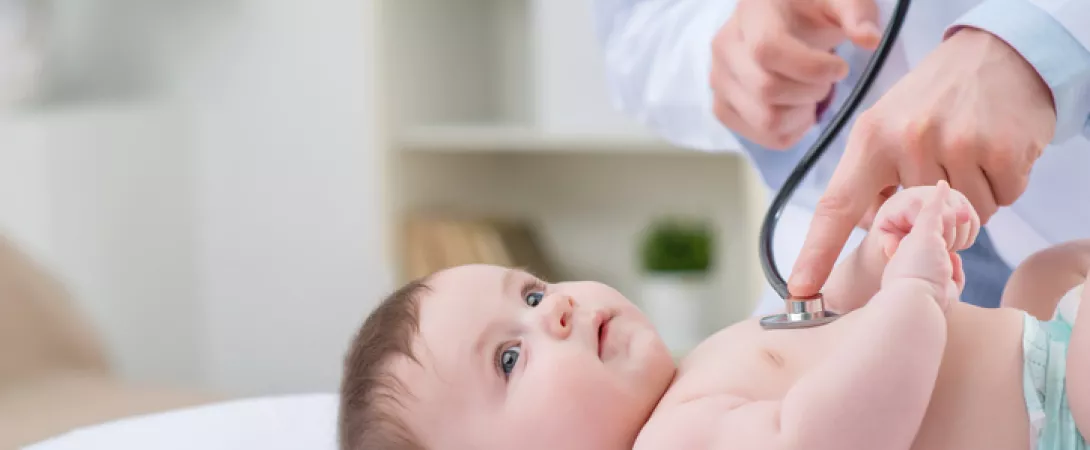
3. Information by healthcare professionals monitoring the child remains insufficient
More than half of parents report that their child was prescribed probiotics or prebiotics by their pediatrician. However, about 57% of them received information about the importance of preserving their child’s microbiota balance to prevent future diseases.
On paper, clinical action is present. But the educational component that should accompany it is largely absent.
more than half of parents surveyed claimed their children had been prescribed probiotics or prebiotics
only 1 in 3 parents received all key microbiota information from their pediatrician
less than 1 in 10 received all key information several times
What pediatricians discuss and what remains overlooked
When asked about specific topics discussed with their pediatrician, parents reveal a striking hierarchy: clinical topics (breastfeeding, antibiotic prescriptions) are more often addressed than the broader concepts (microbiota development, disease prevention).

62% of pediatricians discussed the role of breastfeeding for child's microbiota with parents and pregnant women.
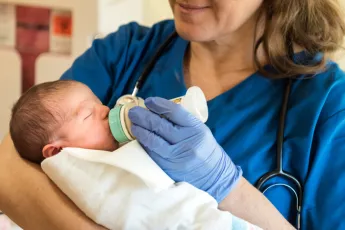
57% of parents were explained the importance of preserving child's microbiota balance and the same number were prescribed probiotics or prebiotics for their child.
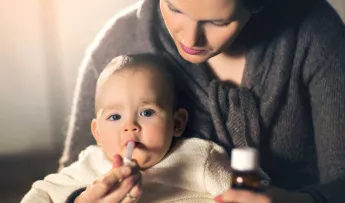
More than half (55%) were prescribed antibiotics and received explanations about their impact on the newborn's microbiota.
However, only 39% of parents and pregnant women received education on microbiota development during the first 1,000 days, precisely the most foundational item. The concept that frames the entire conversation is also the one least discussed in clinical practice.

Probiotics: what exactly are we talking about?
Learn moreThe gap between clinical action and microbiota education varies globally
The rate of comprehensive pediatric microbiota education varies significantly by country, reflecting very different clinical cultures.
- Vietnam leads on both fronts, with 51% of respondents being informed on microbiota and 74% reporting probiotic prescriptions;
- At the other extreme, France, Germany and Finland share the lowest information transmission rate at 13% and less than 1 in 3 receiving probiotics;
- In China, while only 1 in 3 parents received all key information, 71% were prescribed probiotics, the second-highest result;
- In Poland, Italy and Portugal, just 23% were fully informed. Yet nearly 2 in 3 were prescribed a probiotic in Poland and Italy and 41% in Portugal;
- Brazil and Mexico both sit at the global average for information at 31%, but diverge on prescriptions: Mexico reaches 2 in 3 while Brazil lags at about 1 in 2.

How to keep a healthy microbiota?
Find out more
4. Healthcare professional advice boosts parents’ understanding of baby microbiota
Parents and pregnant women were asked 6 true/false questions about what influences a baby's microbiota during the first 1000 days. Those educated about microbiota development by their HCP performed better on average.
For instance, 3 in 4 educated parents know that administering antibiotics during the early stages after birth can have a significant impact on the development of gut microbiota (73% vs. 61% of those not educated by HCPs).
3 in 4 educated parents know that antibiotics can have a significant impact on the early development of gut microbiota
(vs. 61% of uneducated parents)
almost half of them know that the gut microbiota becomes similar to that of an adult by age 5
(vs. 17% of uneducated parents)
of educated parents were aware that pet exposure during early life influence microbiota
(vs. 35% of uneducated parents)
Pregnant women seem more receptive to microbiota education
Pregnant women consistently score higher than parents across all knowledge indicators. This confirms pregnancy as the most fertile ground for microbiota education: a moment when people are attentive, motivated, and engaged with their health.
Pregnancy is the moment when the information can have the most impact, both on the child's future microbiota and on the parent's long-term health behaviors.
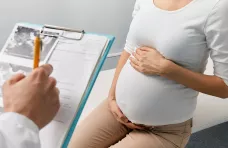
Tiny bacteria, big risks: how vaginal microbes shape pregnancy health
Find out morePriorities emerging from the 2026 Observatory
The 2026 Observatory points to a clear set of priorities for the coming years:
- Expand microbiota education beyond pediatric consultations to include prenatal care;
- Encourage discussions around the first 1,000 days across obstetric and pediatric settings;
- Use antibiotic prescriptions as opportunities for patient education.
- Support HCPs with simple, practical educational messages;


Methodology
This fourth edition of the International Microbiota Observatory was conducted by Ipsos online among 7,500 individuals across 11 countries (France, Portugal, Poland, Finland, Italy, Germany, United States, Mexico, Brazil, China, and Vietnam), between February 3rd and March 13th, 2026. Samples are representative of the population aged 18 and over, via quota sampling (gender, age, region, socio-professional category). Statistical significance is calculated at a 95% confidence level.
The first 1,000 days focus is based on a subsample of 3,040 parents or pregnant women, and 3,000 parents only (for pediatrician-specific questions). The questionnaire covered: awareness of the first 1,000 days concept; knowledge of factors influencing the infant microbiota (6 true/false questions); information received from pediatricians and HCPs; and probiotic/prebiotic prescription practices.

BMI-26.43