

About the Institute
  • English
  • Français
  • Español
  • Portuguese
  • Polish

Breadcrumb

  1. Home
  2. Our marvelous microbiota
  3. How your gut microbes drive vitiligo's white patches
  • Learn all about microbiota
    • The gut microbiota
    • The ENT microbiota
    • The pulmonary microbiota
    • The urinary microbiota
    • The skin microbiota
    • The vaginal microbiota
    • The exposome
  • Microbiota and related conditions
    • Digestive disorders
    • Women disorders
    • Metabolic disorders
    • Skin disorders
    • Pediatric disorders
    • Psychiatric disorders
    • Neurological disorders
    • Respiratory disorders
    • Urinary disorders
  • Act on your microbiota
    • Probiotics
    • Prebiotics
    • Fecal Microbiota Transplant
    • Diet
  • Publications
    • News
    • Thematics folders
    • Thematic pages
    • Microbiota Q & A
    • Patients Stories
    • Experts' point of view
    About the Institute

    Join the microbiota community

    • Facebook
    • Twitter
    • LinkedIn
    • YouTube
    • Instagram
    • Bluesky
  • About the Institute
    • About us
    • International Microbiota Observatory
    • Microbiotalks
    • Press room
    • Partnerships

Healthcare professionals section

Find here your dedicated section
Biocodex logo
The power of your gut
Our marvelous microbiota
My microbiota as a woman

Breadcrumb

  1. Home
  2. Our marvelous microbiota
  3. How your gut microbes drive vitiligo's white patches
Our marvelous microbiota

How your gut microbes drive vitiligo's white patches

Skin health
The gut microbiota

You think of vitiligo as a skin condition. But a new study suggests those pale patches begin much deeper: in the gut, where certain bacteria produce a molecule that travels through the blood and slowly bleaches the skin from within.

The power of your gut
Our marvelous microbiota
My microbiota as a woman
  • Learn all about microbiota
    • The gut microbiota
    • The ENT microbiota
    • The pulmonary microbiota
    • The urinary microbiota
    • The skin microbiota
    • The vaginal microbiota
    • The exposome
  • Microbiota and related conditions
    • Digestive disorders
    • Women disorders
    • Metabolic disorders
    • Skin disorders
    • Pediatric disorders
    • Psychiatric disorders
    • Neurological disorders
    • Respiratory disorders
    • Urinary disorders
  • Act on your microbiota
    • Probiotics
    • Prebiotics
    • Fecal Microbiota Transplant
    • Diet
  • Publications
    • News
    • Thematics folders
    • Thematic pages
    • Microbiota Q & A
    • Patients Stories
    • Experts' point of view
    About the Institute

    Join the microbiota community

    • Facebook
    • Twitter
    • LinkedIn
    • YouTube
    • Instagram
    • Bluesky
  • About the Institute
    • About us
    • International Microbiota Observatory
    • Microbiotalks
    • Press room
    • Partnerships

Healthcare professionals section

Find here your dedicated section
Biocodex logo

Sources

This article is based on scientific information

Sharing is caring

Your friends might be interested in this topic. Why not share it?

  • Facebook
  • Twitter
  • Mail
Photo: How your gut microbes drive vitiligo's white patches

About this article

Author

Dr Amine Zorgani
Created 11 May 2026
Updated 13 May 2026

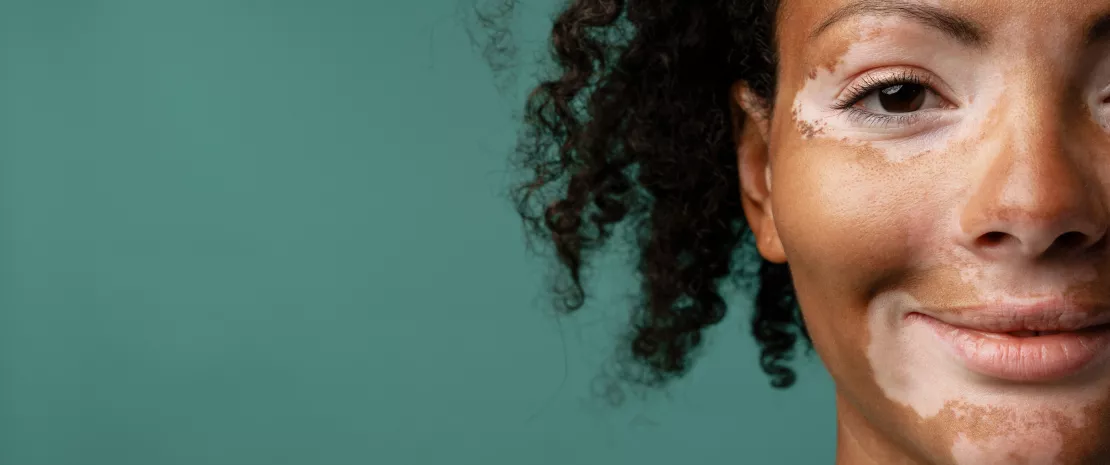
Vitiligo affects up to one in fifty people worldwide. It appears as pale, depigmented patches where the skin's pigment-making cells, (sidenote: Melanocyte The specialised cell that produces melanin, the pigment giving skin its colour and protecting it from sunlight. When melanocytes are damaged or destroyed, as in vitiligo, the skin loses its tone in the affected areas. ) , have fallen silent or died. For decades, dermatologists have focused on calming the skin itself, with steroid creams, ultraviolet lamps and, increasingly, lasers. Yet patches often return. A team of Chinese researchers 1 suspected the real trouble might be starting somewhere else entirely: the gut.

Vitiligo

A chronic skin condition in which the body's own immune system turns against melanocytes, the cells that colour the skin, eyes and hair. As melanocytes disappear, pale patches slowly take their place. 

A long-distance signal between gut and skin

Using a mouse model of vitiligo, the team showed that when they wiped out the animals' gut bacteria with antibiotics, the depigmenting patches shrank and the skin's level of (sidenote: Oxidative stress A chemical imbalance inside cells in which reactive, unstable molecules, often compared to sparks, begin to damage proteins, DNA and membranes. In vitiligo, this slow-burning damage is thought to push melanocytes toward death. ) , a kind of cellular rusting that damages (sidenote: Melanocyte The specialised cell that produces melanin, the pigment giving skin its colour and protecting it from sunlight. When melanocytes are damaged or destroyed, as in vitiligo, the skin loses its tone in the affected areas. ) , dropped sharply. 

02.08.2021 The skin microbiota Read more
02.08.2021 The gut microbiota Read more

But when they placed different groups of vitiligo-affected mice together in the same cage, allowing their microbes to mix, the younger animals co-housed with older mice developed worse patches than those kept apart. The gut, it seems, was quietly pulling strings far above its own address.

Meet hippuric acid, the unlikely messenger

Screening hundreds of molecules in feces, blood and skin, the scientists kept arriving at the same suspect: (sidenote: Hippuric acid A small molecule made when gut bacteria digest plant compounds found in fruits, vegetables, tea and coffee. Normally harmless, it turns out to rise sharply in vitiligo and, this study argues, travels from gut to skin to fuel the damage there. ) , a small acid that gut microbes help produce from plant compounds in food. In vitiligo mice, hippuric acid was piled up in the skin at roughly five times normal levels. Injected into healthy mice, it reproduced the same chemical damage. Even more telling, when the researchers measured blood from 15 people with active vitiligo, their hippuric acid was nearly twice that of healthy volunteers.

0.5% to 2% Vitiligo affects roughly 0.5 to 2% of the world's population.

A leaky barrier and a surprising treatment hint

How did a gut molecule reach the skin in such quantities? The vitiligo mice had fewer goblet cells, the tiny factories that line the intestine with protective mucus. With that inner lining thinned, hippuric acid slipped more easily into the bloodstream and travelled outward, ultimately latching onto two proteins in skin cells, NOS2 and MAPK14, that crank up oxidative damage.

The hopeful twist: feeding the mice a probiotic mixture visibly slowed their depigmentation. For a condition that carries a quiet emotional weight for millions, that is a new direction worth watching. Human trials will need to confirm it, but the finding opens a therapeutic door vitiligo has rarely looked through.

Your skin does not stand alone. What unfolds on it can be authored pages away, in a place you cannot see. Treating vitiligo may one day mean mending that distant text, not only the mark it left behind.

Feel good in your skin... and your skin microbiota

Learn more
Sources

1. Ni Q, Xia L, Huang Y, et al. Gut microbiota dysbiosis orchestrates vitiligo-related oxidative stress through the metabolite hippuric acid. Microbiome, 2025;13:112. 

Tags
Autoimmune disease Dermatology Stress Probiotics Gut-skin axis Skin microbiota Microbiome Flora

    See also

    When your beauty routine kills certain bacteria
    Photo: Dermatite atopique : il faut sauver la peau du champignon Malassezia Atopic dermatitis: protecting the skin from the Malassezia fungus
    Created 11 May 2026
    Updated 13 May 2026

    About this article

    To know more about this topic.

    Main topic

    Skin health

    Related microbiotas

    The gut microbiota

    Author

    Dr Amine Zorgani
    Our marvelous microbiota

    Diet

    Although our intestinal flora is probably determined by genes and the environment we live in, there is no d...

    Find out more

    Chronic abdominal pain in children: could it be IBS?

    “Mom, dad, my tummy hurts…”. Just an excuse to skip school, or a real illness? If the abdominal pain is rec...

    Find out more

    Acne and microbiota

    Acne, which is a very common skin disease during adolescence, is caused by hormonal changes associated with...

    Find out more

    Microbiotalk: "Break barriers and address taboos in women’s health" - 2025

    Breaking Barriers: A Bold Conversation on Women’s Health ...

    Find out more

    Exposome: exposed microbiota puts health at risk

    Have you ever noticed that some people seem to get sick more often than others? Behind this inequality lies...

    Find out more

    Microbiotalk: short conferences on antimicrobial resistance

    Breaking the silence: a global conversation on antimicrobial resistance Antimicrobial resistance (AMR) is ...

    Find out more

    Probiotics

    Probiotics: essential information for understanding and choosing them correctly. What exactly are probiotic...

    Find out more

    Microbiotalk: "World Microbiome Day"

    Understanding microbiota through science, society, and participation This special edition of Microbiotalk,...

    Find out more

    Latest news

    News
    28.10.2021

    6 essential things you should know about antibiotics

    Read the article
    04.03.2026

    When your beauty routine kills certain bacteria

    Read the article
    23.01.2026

    Pancreatic cancer: oral microbiota could predict risk

    Read the article
    03.12.2020

    Post-diet weight gain: the microbiota’s anti-yo-yo effect

    Read the article
    01.12.2025

    Exposome: understanding how our environment shapes our microbiota

    Read the article
    20.05.2025

    Microbiota and exposome: a dialog at the core of our health

    Read the article
    20.05.2025

    Towards a more favorable exposome

    Read the article
    20.05.2025

    From birth to death, an exposome with different consequences on our health

    Read the article
    • Learn all about microbiota
      • The gut microbiota
      • The ENT microbiota
      • The pulmonary microbiota
      • The urinary microbiota
      • The skin microbiota
      • The vaginal microbiota
      • The exposome
    • Microbiota and related conditions
      • Digestive disorders
      • Women disorders
      • Metabolic disorders
      • Skin disorders
      • Pediatric disorders
      • Psychiatric disorders
      • Neurological disorders
      • Respiratory disorders
      • Urinary disorders
    • Act on your microbiota
      • Probiotics
      • Prebiotics
      • Fecal Microbiota Transplant
      • Diet
    • Publications
      • News
      • Thematics folders
      • Thematic pages
      • Microbiota Q & A
      • Patients Stories
      • Experts' point of view
      About the Institute

      Join the microbiota community

      • Facebook
      • Twitter
      • LinkedIn
      • YouTube
      • Instagram
      • Bluesky
    • About the Institute
      • About us
      • International Microbiota Observatory
      • Microbiotalks
      • Press room
      • Partnerships

    Healthcare professionals section

    Find here your dedicated section
    Biocodex logo
    The power of your gut
    Our marvelous microbiota
    My microbiota as a woman
    • English
    • Français
    • Español
    • Portuguese
    • Polish

    Browse the site

    • Learn all about microbiota
      • The gut microbiota
      • The ENT microbiota
      • The pulmonary microbiota
      • The urinary microbiota
      • The skin microbiota
      • The vaginal microbiota
      • The exposome
    • Microbiota and related conditions
      • Digestive disorders
      • Women disorders
      • Metabolic disorders
      • Skin disorders
      • Pediatric disorders
      • Psychiatric disorders
      • Neurological disorders
      • Respiratory disorders
      • Urinary disorders
    • Act on your microbiota
      • Probiotics
      • Prebiotics
      • Fecal Microbiota Transplant
      • Diet
    • Publications
      • News
      • Thematics folders
      • Thematic pages
      • Microbiota Q & A
      • Patients Stories
      • Experts' point of view
      About the Institute

      Join the microbiota community

      • Facebook
      • Twitter
      • LinkedIn
      • YouTube
      • Instagram
      • Bluesky
    • About the Institute
      • About us
      • International Microbiota Observatory
      • Microbiotalks
      • Press room
      • Partnerships

    Healthcare professionals section

    Find here your dedicated section
    Biocodex logo

    Discover

    The power of your gut
    Our marvelous microbiota
    My microbiota as a woman

    Join the microbiota community

    • Facebook
    • Twitter
    • LinkedIn
    • YouTube
    • Instagram
    • Bluesky

    Healthcare professionals section

    Find here your dedicated section

    Redirection

    You are about to be redirected and leave our website

    • Be redirected
    • Stay on the Biocodex Microbiota Institute's website

    Stay with us !

    Join the microbiota community and receive "The Essentials" once a month to stay up to date with the latest news on the microbiota.

    * Mandatory Fields

    BMI 20-35

    Explore

    Photo: How your gut microbes drive vitiligo's white patches
    11.05.2026

    How your gut microbes drive vitiligo's white patches

    Read the article
    06.05.2026

    Do early-life bifidobacteria reduce allergies?

    Read the article
    Photo: Comment votre flore intestinale dope ou sabote vos nuits
    14.04.2026

    How gut flora improves or disrupts sleep

    Read the article

    Stay updated

    Join the Microbiota Community and receive once a month “The Essential” to stay up to date on the latest news about microbiota.

    * Mandatory Fields

    BMI 20-35

    • Learn all about microbiota
      • The gut microbiota
      • The ENT microbiota
      • The pulmonary microbiota
      • The urinary microbiota
      • The skin microbiota
      • The vaginal microbiota
      • The exposome
    • Microbiota and related conditions
      • Digestive disorders
      • Women disorders
      • Metabolic disorders
      • Skin disorders
      • Pediatric disorders
      • Psychiatric disorders
      • Neurological disorders
      • Respiratory disorders
      • Urinary disorders
    • Act on your microbiota
      • Probiotics
      • Prebiotics
      • Fecal Microbiota Transplant
      • Diet
    • Publications
      • News
      • Thematics folders
      • Thematic pages
      • Microbiota Q & A
      • Patients Stories
      • Experts' point of view
      About the Institute

      Join the microbiota community

      • Facebook
      • Twitter
      • LinkedIn
      • YouTube
      • Instagram
      • Bluesky
    • About the Institute
      • About us
      • International Microbiota Observatory
      • Microbiotalks
      • Press room
      • Partnerships

    Healthcare professionals section

    Find here your dedicated section
    Biocodex logo

    Discover

    The power of your gut
    Our marvelous microbiota
    My microbiota as a woman

    Healthcare professionals section

    Find here your dedicated section

    Join the microbiota community

    • Facebook
    • Twitter
    • LinkedIn
    • YouTube
    • Instagram
    • Bluesky

    © 2026 Biocodex. All rights reserved.

    • Legal notice
    • GTU
    • Data protection policy
    • Sitemap
    • Cookies settings
    • Digital accessibility : partially compliant
    Biocodex logo