

Your IBS Diagnosis Check List
How many patients suffering from gut disorders do you see per week? How many are diagnosed with irritable bowel syndrome (IBS)? Do you know that some patients struggled more than 4 years before receiving a formal medical diagnosis of IBS?
Up to 75% of individuals with Irritable Bowel Syndrome (IBS) may be undiagnosed. As a complex disorder driven by multiple factors with symptoms that can overlap with those of other gastrointestinal diseases and disorders, diagnosing IBS can be challenging.
To help, Prof. Jean-Marc Sabaté, Prof. Jan Tack, Dr. Pedro Costa Moreira, in collaboration with the Biocodex Microbiota Institute, have developed an IBS Diagnosis Checklist, providing a tool to diagnose IBS more accurately and enhance a clearer communication with your patient, improving management and care. This tool has received the endorsement of the World Gastroenterology Organisation.
Lay public section
Find here your dedicated section



About this article
Authors


Download your tool here:

52% Just 1 in 2 people having suffered from a digestive condition involving the microbiota had made the connection
68% More than 2 in3 people know that IBS could be related to microbiome

How to define Irritable Bowel Syndrome (IBS)?
Irritable bowel syndrome is a disorder of the gut-brain axis (DGBI) and is a symptom-based disorder with no tissue damage.
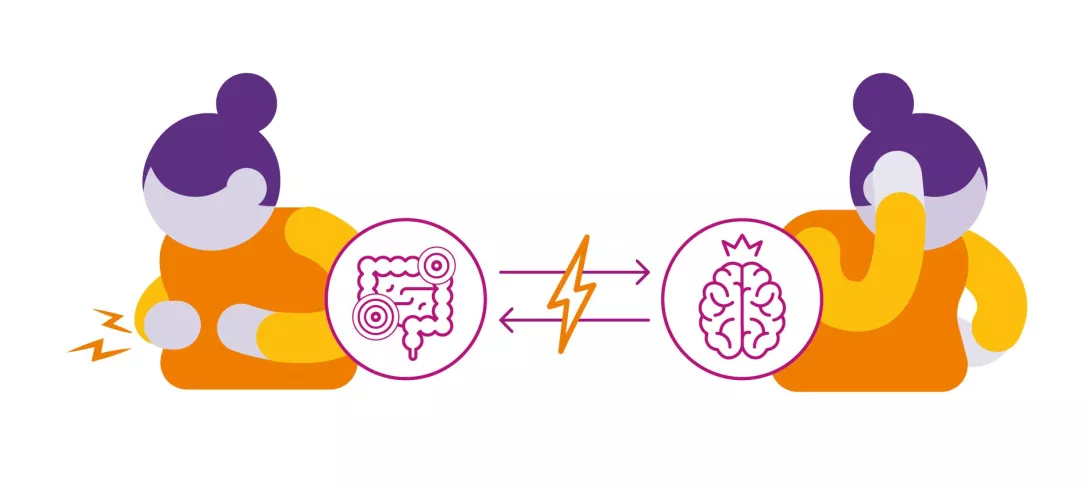
It is characterized by:
- Bloating and/or abdominal distension
- Recurrent (but not continuous) abdominal pain or discomfort
- Altered bowel habits (in terms of frequency and/or shape of stools).
In addition, patients often experience higher anxiety and/or depression levels, and IBS occurrence could be related to an imbalance of the gut microbiota – or dysbiosis.
4 to 10% of population suffer from IBS, depending on the geographical region and the criteria used for assessment. For example, Western Europe tends to have higher rates than Asia.
- Bloating, recurrent abdominal pain/discomfort and altered bowel habit characterize this symptom-base disorder named irritable bowel syndrome (IBS).
- IBS is a disorder of gut–brain interaction, the two organs don’t understand and communicate with each other properly.
- IBS is a symptom-based disorder with no tissue damage>.
- Gastrointestinal symptoms do not come alone, IBS is often accompanied by higher levels of psychological upset such as anxiety, stress and depression.
- The brain receives signals from the bowel that are over-interpreted as signals of harm.

What do we know about the pathophysiology?
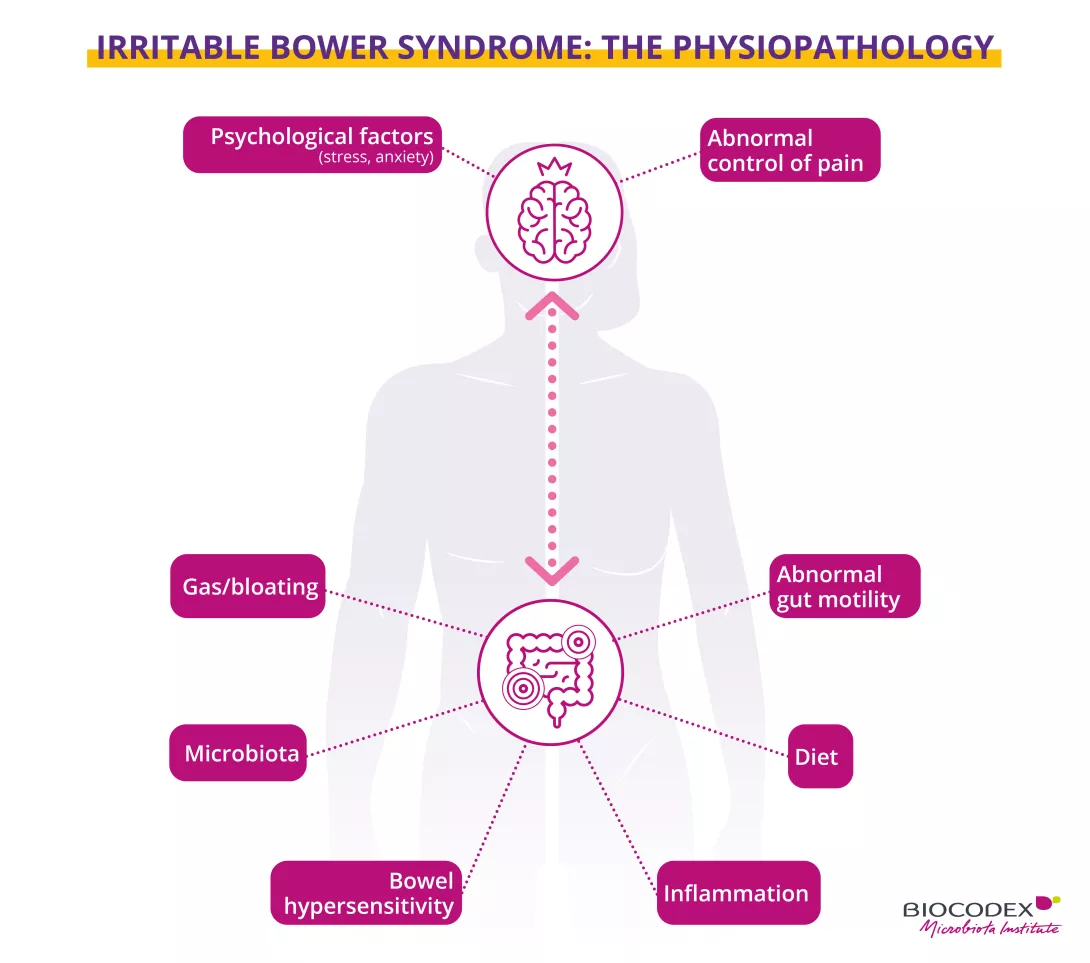
Although the precise biological mechanisms underlying IBS are not fully understood yet and the precise etiology of the disorder remains elusive, recent evidence identified the following pathophysiological mechanisms:
- Psychological factors including stress, anxiety, depression can influence gut function and exacerbate symptoms
- Gas/bloating
- Microbiota: changes in the gut microbiota may contribute to immune activation, visceral hypersensitivity, and altered motility
- Bowel hypersensitivity: increased sensitivity of bowel sensory neurons leads to exaggerated pain and discomfort in response to normal stimuli
- Inflammation: low-grade inflammation contributes to symptoms
- Diet
- Abnormal gut motility
- Abnormal control of pain in the central nervous system
How to make a confident diagnosis?
IBS is diagnosed according to Rome V criteria.
- Presence of chronic/recurrent and not continuous abdominal pain or discomfort at least 3 days per month in the last three months, with criteria onset at least six months before diagnosis.
- Associated with two or more of the following criteria: related to defecation, associated with a change in frequency of stool, associated with a change in form (appearance, consistency) of stool.
To be noted: abdominal pain and discomfort should not be only related to menses.
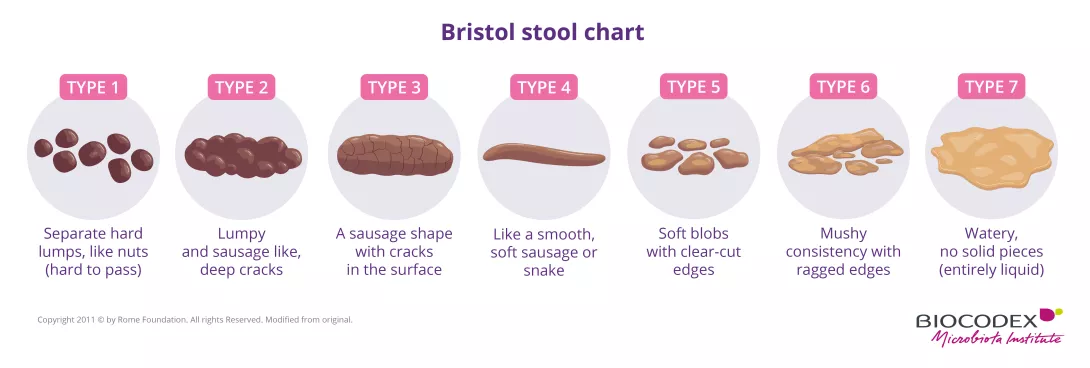
- The bowel is processing signals over-sensitively and this affects function.
- The function of the bowel is affected by the nervous system.
- The bowel sends signals in such a way that they are over-interpreted by the brain.
- The brain is receiving or processing signals too sensitively.
- The brain is misinterpreting normal signals from the body as signs of disease.
- IBS could be related to an unbalanced gut microbiota.
Everything you need to know about the microbiota gut-brain axis
What are the warning signs requiring further evaluation?
Checklist of features requiring additional investigations of referral
- Family history (inflammatory bowel disease, celiac disease or colorectal cancer)
- Weight loss
- Fever
- New symptoms (less than 6 months)
- Nocturnal symptoms
- Extra-intestinal symptoms (arthritis, rash, eye inflammation)
- Recent use of antibiotics
- Abnormalities in physical examination
- Anemia or blood loss
- Increase in inflammatory markers
- Fecal incontinence
- Abdominal mass
Which investigations are needed?
Don’t over investigate!
Consider in specific case:
- Fecal calprotectin in case of diarrhea as a symptom and if reimbursed in your country.
- Serology for celiac disease if the pathology is prevalent in your country.
- Thyroid test only in case of majorly altered bowel habit, with other clinical signs, to be reassured.
- Colonoscopy only in selected cases, based on stool pattern sub-type (diarrhea) and result of calprotectin test, age threshold for colorectal cancer screening (usually >50 years), personal and/or familial history.
- Rectal Exam recommended in anyone with blood in the stools; Males & Females > 40 years with lower GI symptoms.
Not useful as routine tests
- Iron studies
- Albumin
- Parasitology (parasite if overseas travels stool MC&S, C. difficile toxin)
- Bowel cancer screening outside the recommended national guidelines
- CT scan / Ultrasound / MRI
- Gynecological evaluation
What are the general management concepts?
IBS symptoms are managed with a multi-faceted approach including:
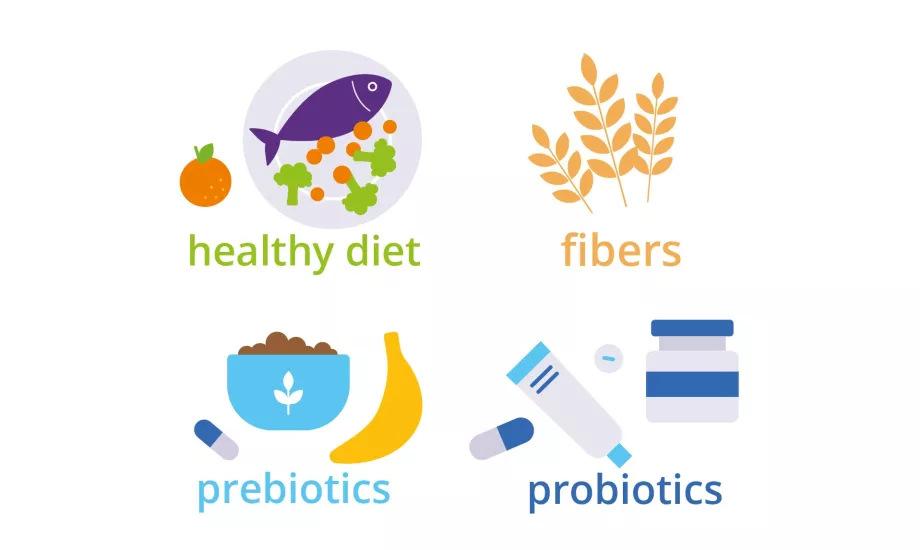
- Healthy diet, limiting the intakes of potential dietary triggers such as FODMAPs, lactose, gluten, etc.
- Prebiotics, probiotics and/or fibers intake
- Regular physical activity
- Regular sleep habits
- Psychotherapeutic interventions such as Cognitive Behavior Therapy (CBT), hypnosis, psychodynamic, relaxation, etc., for long-term psychological support could help reduce the symptoms by acting on the gut-brain interaction.
- Specific drug targeting bowel function, pain or bloating could help reduce symptoms: antispasmodics, antidiarrheals, laxatives, etc.


- The microbial communities that live in a specific environment of the body is called microbiota.
- An unbalanced gut microbiota, or dysbiosis, is a change in the composition and functions of the microorganisms that live in the gut.
- Food, bacteria, or substances found in the gut can sometimes cause the gut to malfunction and trigger symptoms.
- IBS is a chronic disorder where symptoms can be managed through lifestyle changes, dietary therapy and psychological therapies.
- We will meet every 6 to 8 weeks in order to follow up the effectiveness of the treatment/strategy.
When to schedule a follow-up care?
Reevaluate treatment in 6 to 8 weeks.
Endorsed by

The World Gastroenterology Organisation
The World Gastroenterology Organisation (WGO) is a federation of 119 Member Societies and four Regional Associations of gastroenterology representing over 60,000 individual members worldwide. The WGO focuses on the improvement of standards in training, education, and the practice of Gastroenterology, Hepatology and other related disciplines worldwide. https://www.worldgastroenterology.org/

The APSSII
The APSSII is an association of patients suffering from irritable bowel syndrome (IBS, also called functional colopathy). Its purpose is to inform about the disease, to promote research, and to allow patients to come out of isolation.
https://www.apssii.org/accueil/index.php
https://youtu.be/xveUZuPcjak
Get the official printed tool!
Ask your local representative to get your fan deck brochure of the IBS diagnosis tool.
To know more
Everything you need to know about Irritable Bowel Syndrome (IBS)
Recommended by our community

"As a gastroenterologist I’ve never found difficult to diagnose IBS, which is by far the most common intestinal disorder at any age.
But any tool which can help physicians( especially GPs) to reach a correct diagnosis is obviously very welcome." - Mario Guslandi (From Biocodex Microbiota Institute on LinkedIn)"Excellent, thanks!" - Carlos Mora (From Biocodex Microbiota Institute on LinkedIn)


