
About the Institute
  • English
  • Français
  • Español
  • Portuguese
  • Polish

Breadcrumb

  1. Home
  2. Gastroenterology
  3. Intratumoral microbiota in colorectal cancer: an independent prognostic indicator?
  • Our publications
    • News
    • HCP Magazine
    • Thematic pages
    • Thematic folders
    • Overviews - Microbiota Magazine
  • About the Institute
    • About us
    • International Microbiota Observatory
    • Press room
    • Partnerships
  • Congresses
    • Congress calendar
    • Congress reviews
  • Continuing Medical Education
    • Accrediting courses
  • Useful documents
    • How to talk about
    • Infographics
    • Diagnosis tools
    • Patients Stories
    • Experts' point of view

Lay public section

Find here your dedicated section

Gastroenterology
Gynecology
Pediatrics
General Medicine

Breadcrumb

  1. Home
  2. Gastroenterology
  3. Intratumoral microbiota in colorectal cancer: an independent prognostic indicator?
Gastroenterology

Intratumoral microbiota in colorectal cancer: an independent prognostic indicator?

Cancer

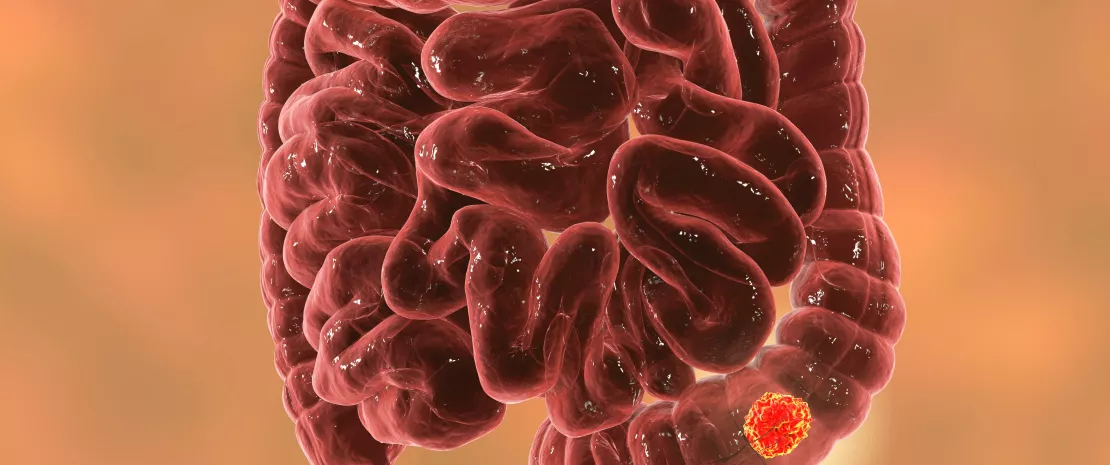
A prospective cohort study involving 937 patients suggests that the microbiota present within colorectal tumor tissues is associated with prognosis, independently of established clinical and molecular factors.

Gastroenterology
Gynecology
Pediatrics
General Medicine
  • Our publications
    • News
    • HCP Magazine
    • Thematic pages
    • Thematic folders
    • Overviews - Microbiota Magazine
  • About the Institute
    • About us
    • International Microbiota Observatory
    • Press room
    • Partnerships
  • Congresses
    • Congress calendar
    • Congress reviews
  • Continuing Medical Education
    • Accrediting courses
  • Useful documents
    • How to talk about
    • Infographics
    • Diagnosis tools
    • Patients Stories
    • Experts' point of view

Lay public section

Find here your dedicated section

Sources

This article is based on scientific information
Sharing is caring

Your colleagues might be interested in this topic. Why not share it?

  • Facebook
  • Twitter
  • LinkedIn
  • Mail
Intratumoral microbiota in colorectal cancer: an independent prognostic indicator?

About this article

Created 15 July 2026
Updated 16 July 2026

Colorectal cancer is the second leading cause of cancer-related death worldwide.

9,3 % Representing 9.3% of the total cancer mortality in 2022 ¹.

47 582 In France, 47,582 new cases were diagnosed in 2023 – 95% of which occurred in people over the age of 50, with men accounting for 55% of cases and women 45% ².

Benchmark methodology: Next-Generation Sequencing (NGS) on 937 patients

Shi et al. 3 analyzed whole-genome sequencing data from 1,412 tissue samples:

  • 937 tumors and 475 normal adjacent tissues (NAT)
  • and 462 blood samples from 937 treatment-naive patients recruited from the prospective U-CAN cohort (Uppsala-Umeå, Sweden).  

Validation was performed using an independent external cohort (AC-ICAM, n = 246). To address recent methodological controversies in this field, a rigorous bioinformatics pipeline was developed to detect and quantify bacteria present in tumor tissues, prioritizing specificity over sensitivity. 

Molecular subtypes of colorectal cancer (CMS1–4)

Colorectal cancer is not a homogeneous group. The international CMS (Consensus Molecular Subtypes) classification distinguishes four subtypes based on the tumor’s molecular profile 4. 
This classification is central to the interpretation of the results by Shi et al.

CMS1

Characteristics:

  • hypermutated tumors,
  • strong immune response,
  • ascending colon.

Microbial correlation in the study by Shi et al., 2025: relative abundance: enrichment in Fusobacterium (Fn. animalis C2, Fn. nucleatum, Fn. vincentii and Fn. polymorphum), and oral bacteria (Parvimonas, Peptostreptococcus, Treponema) compared to other CMSs. No pks+ prognostic correlation specific to this subtype.

CMS2

Characteristics:

  • most common (37%),
  • activation of the WNT and MYC pathways.

Microbial correlation in the study by Shi et al., 2025: specific pks+/Enterobacteriaceae prognostic correlation→ poor prognosis.

CMS3

Characteristics:

  • metabolic abnormalities
  • frequent KRAS mutation.

Microbial correlation in the study by Shi et al., 2025: no specific pks+ prognostic correlation identified in this study.

CMS4

Characteristics:

  • mesenchymal transformation
  • high risk of metastasis.

Microbial correlation in the study by Shi et al., 2025: prognostic correlation with an enrichment in Fn. animalis C2, Fn. nucleatum, and Fn. polymorphum, linked to reduced survival via specific immunometabolic pathways.

While the prognostic correlation of pks+/Enterobacteriaceae with patient outcome is specific to CMS2, CMS1 and CMS4 exhibit distinct microbial signatures with no such pks+ prognostic association.

361 species identified and a validated microbial risk score

The authors identified 249 genera and 361 bacterial species common to both tumors and NATs, including:

  • Fusobacterium nucleatum,
  • various Enterobacteriaceae (E. coli),
  • Akkermansia muciniphila,
  • Firmicutes, and species belonging to the genus Treponema.

Microbial signatures varied according to anatomical location, tumor stage, and consensus molecular subtypes (CMS1–4).
17.4% of tumors tested positive for the pks genomic island, which is carried by certain genotoxic E. coli strains that affect colorectal cancer cells via the toxin colibactin. The presence of pks+ and a high abundance of Enterobacteriaceae were specifically associated with a poor prognosis in the CMS2 subtype.

Intestinal microbiota modulates tumour response in cancer patients

Learn more

Two microbial risk scores – MRS-T (tumor) and MRS-N (NAT) – were developed and validated across the three cohorts. These scores were able to predict overall survival independently of conventional clinicopathological factors, thereby improving the discriminatory power of the prognostic model compared with models based on host factors alone.
The unfavorable taxa were associated with the activation of pro-inflammatory pathways (hypoxia, MAPK1/3, IL-6) and the modulation of the tumor immune system. 

Clinical implications and limitations

The intratissue microbiota of colorectal cancer constitutes an independent source of prognostic information, that could complement current molecular markers. The specificity of the correlation between the presence of pks/Enterobacteriaceae and poor prognosis in the CMS2 subtype suggests that molecular subtyping must be incorporated when interpreting the role of the microbiome.
Limitations to note include:

  • observational study design,
  • the inclusion of treatment-naive patients only,
  • and the fact that WGS is not yet feasible for routine clinical use at this stage.

Mechanistic and prospective studies remain necessary before these findings can have any clinical application. 

Sources

1. PAHO-Bilan mondial du cancer.
2. Ameli-Cancer colorectal.
3. Shi Z. et al. Tissue-resident microbiota impacts colorectal cancer progression and prognosis. Nature Communications, 2026, 17:346. https://doi.org/10.1038/s41467-025-67047-2.
4. Guinney J. et al. The consensus molecular subtypes of colorectal cancer. Nature Medicine, 2015, 21(11), 1350–1356. https://doi.org/10.1038/nm.3967.

Tags
Oncology Colorectal cancer Cancer Immunity Immune response CRC Biomarker Immunotherapy Microbiome Flora

    See also

    Aspirin: antibiotic effect in colorectal cancer?
    Commensal clostridiales strains mediate effective anti-cancer immune response against solid tumours
    Created 15 July 2026
    Updated 16 July 2026

    About this article

    To know more about this topic.

    Main topic

    Cancer

    Content type

    News
    Gastroenterology

    The Janus face of Antibiotics: Life Savers and Microbiota Disruptors

    A page turns: with the advent of antibiotics in the 20th century, this type of therapy, despite its undoubt...

    Find out more

    Everything you need to know about Irritable Bowel Syndrome (IBS)

    Accrediting training, infographics, expert’s video, thematic folder, news… Biocodex Microbiota Institute pr...

    Find out more

    Antimicrobial resistance fresco: learn, play and act now

    The Antimicrobial resistance fresco is an interactive and educational experience that raises awareness abou...

    Find out more

    Resilience of healthy adult gut microbiota following antibiotic exposure

    Commented articles - Adults' section By Pr. Harry Sokol ...

    Find out more

    Probiotics: what exactly are we talking about?

    From the Latin pro and Greek bios meaning “for life”, the term “probiotic” was suggested over 60 years ago,...

    Find out more

    Association between fungal dysbiosis and environment

    The fungal portion of the gut microbiota (or mycobiota) has been much less studied than the bacterial porti...

    Find out more

    Your IBS Diagnosis Check List

    How many patients suffering from gut disorder do you see per week? How many are diagnosed with Irritable Bo...

    Find out more

    How do you choose a probiotic for your patient?

    Faced with a plethora of products on the market, it's not always easy for health professionals to suggest a...

    Find out more

    Continue reading

    News
    06.07.2026

    A gut bacterium that builds muscle strength

    Read the article
    22.06.2026

    Role of Streptococcus anginosus in gastric cancer

    Read the article
    25.05.2026

    At-home gut microbiome tests: patients should exercise caution

    Read the article
    14.04.2026

    Nurseries: microbiota exchange hubs

    Read the article
    Cover-Special-Folder_ABX-&-Microbiota
    20.11.2020

    The Janus face of Antibiotics: Life Savers and Microbiota Disruptors

    Read the article
    25.03.2026

    How the gut microbiome affects sleep quality

    Read the article
    22.11.2021

    Irritable bowel syndrome: is fecal microbiota transplantation effective in the long term?

    Read the article
    20.10.2023

    Fecal transplant: “where, when, how much” needed to optimize effects on IBS?

    Read the article
    • Our publications
      • News
      • HCP Magazine
      • Thematic pages
      • Thematic folders
      • Overviews - Microbiota Magazine
    • About the Institute
      • About us
      • International Microbiota Observatory
      • Press room
      • Partnerships
    • Congresses
      • Congress calendar
      • Congress reviews
    • Continuing Medical Education
      • Accrediting courses
    • Useful documents
      • How to talk about
      • Infographics
      • Diagnosis tools
      • Patients Stories
      • Experts' point of view

    Lay public section

    Find here your dedicated section
    Gastroenterology
    Gynecology
    Pediatrics
    General Medicine
    • English
    • Français
    • Español
    • Portuguese
    • Polish

    Browse the site

    • Our publications
      • News
      • HCP Magazine
      • Thematic pages
      • Thematic folders
      • Overviews - Microbiota Magazine
    • About the Institute
      • About us
      • International Microbiota Observatory
      • Press room
      • Partnerships
    • Congresses
      • Congress calendar
      • Congress reviews
    • Continuing Medical Education
      • Accrediting courses
    • Useful documents
      • How to talk about
      • Infographics
      • Diagnosis tools
      • Patients Stories
      • Experts' point of view

    Lay public section

    Find here your dedicated section

    Discover

    Gastroenterology
    Gynecology
    Pediatrics
    General Medicine

    Join the microbiota community

    • Facebook
    • Twitter
    • LinkedIn
    • YouTube
    • Instagram
    • Bluesky

    Lay public section

    Find here your dedicated section

    Redirection

    You are about to be redirected and leave our website

    • Be redirected
    • Stay on the Biocodex Microbiota Institute's website

    Stay updated

    Join the Microbiota Community of HCPs and researchers and receive “Microbiota Digest” and "HCP Magazine" to stay up to date on the latest news about microbiota.

    * Mandatory Fields

    BMI 20-35

    Stay with us !

    Join the Microbiota Community of HCPs and researchers and receive “Microbiota Digest” and "HCP Magazine" to stay up to date on the latest news about microbiota.

    * Mandatory Fields

    BMI 20-35

    Explore

    Intratumoral microbiota in colorectal cancer: an independent prognostic indicator?
    15.07.2026

    Intratumoral microbiota in colorectal cancer: an independent prognostic indicator?

    Read the article
    06.07.2026

    A gut bacterium that builds muscle strength

    Read the article
    29.06.2026

    The long-overlooked bacterial component of calcium kidney stones

    Read the article
    • Our publications
      • News
      • HCP Magazine
      • Thematic pages
      • Thematic folders
      • Overviews - Microbiota Magazine
    • About the Institute
      • About us
      • International Microbiota Observatory
      • Press room
      • Partnerships
    • Congresses
      • Congress calendar
      • Congress reviews
    • Continuing Medical Education
      • Accrediting courses
    • Useful documents
      • How to talk about
      • Infographics
      • Diagnosis tools
      • Patients Stories
      • Experts' point of view

    Lay public section

    Find here your dedicated section

    Discover

    Gastroenterology
    Gynecology
    Pediatrics
    General Medicine

    Lay public section

    Find here your dedicated section

    Join the microbiota community

    • Facebook
    • Twitter
    • LinkedIn
    • YouTube
    • Instagram
    • Bluesky

    © 2026 Biocodex. All rights reserved.

    • Legal notice
    • GTU
    • Data protection policy
    • Sitemap
    • Cookies settings
    • Digital accessibility : partially compliant
    Biocodex logo