



Kefir: is it good for gut health?
You've seen it on every supermarket shelf and TikTok feed. Kefir, the 3,000-year-old fermented drink, has become a wellness icon, displayed as a healthy food and a nutrition trend. But while marketing races ahead, science is quietly trying to catch up, and what it has to say about its effect on health may surprise you.
Healthcare professionals section
Find here your dedicated section
About this article
Author

The kefir market is racing toward 2.78 billion dollars by 2030. Influencers swear by it. Supermarkets devote whole shelves to it.
Yet a new scientific review tells a humbler story: when researchers asked what kefir actually does to your microbiome, gut health and metabolic balance, the honest answer was, we still don't really know.

A 3,000-year-old drink meets modern science
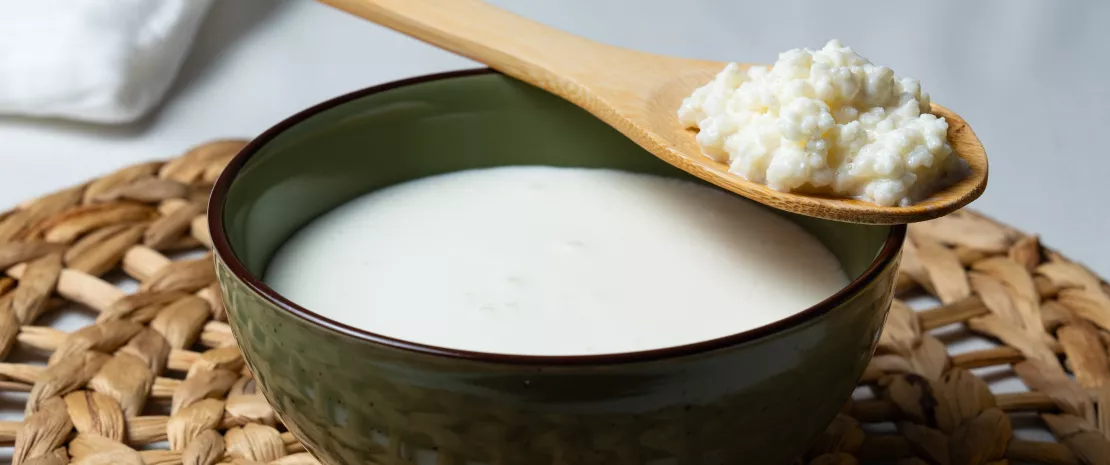
Long before lab coats existed, shepherds in the Caucasus mountains were already fermenting milk into a fizzy, tangy drink using mysterious 'grains', clusters of bacteria and yeasts living in a jelly-like matrix.
Three millennia later, scientists finally peered inside those grains and found a bustling micro-city:
- lactic acid bacteria,
- acetic acid bacteria,
- and yeasts working together through fermentation.
Among the residents are friendly names like Lentilactobacillus kefiri and Saccharomyces cerevisiae, microbial species already linked to fermented milk ecosystem.
The hope is that drinking this living community could enrich your own, your gut, your mouth, your inner ecosystem, and perhaps influence your immune, metabolic and inflammatory responses.
Your mouth: where kefir scores its clearest win
Of all the body's microbiomes, your mouth is where kefir's effects look most consistent.
Across four studies 1, in adults, in children getting braces, in kids recovering from cavities, kefir drinkers showed lower levels of Streptococcus mutans, the main culprit behind tooth decay, suggesting a possible effect on oral health.
Think of it as gentle competition: by flooding your mouth with friendly microbes from fermented food, kefir leaves less room for the troublemakers. But here's the catch, these studies only measured saliva counts, not actual cavities. Whether that translates to fewer trips to the dentist is still an open question for oral and nutrition research.
The psychobiotic diet: might fermented or prebiotic-rich foods reduce stress?
Your gut: a story still being written
Down in the gut, the picture gets murkier.
Some studies hint at small wins: women with polyendocrine metabolic ovarian syndrome (previously known as polycystic ovary syndrome) saw shifts in their microbiota profile; people with inflammatory bowel disease reported feeling better; critically ill patients showed early signs of recovery.
But other studies found almost nothing. Why so messy? Because no two kefirs are alike.
The grains, the milk, the fermentation time, every variable changes the final brew and, in the end, the species composition and the potential effects.
So, if you enjoy kefir, drink it as part of a balanced diet. Just don't expect it to be a miracle food. Science is still figuring out what your microbiome thinks of it.
See also


