

About the Institute
  • English
  • Français
  • Español
  • Portuguese
  • Polish

Breadcrumb

  1. Home
  2. The power of your gut
  3. Can sweeteners help us lose weight and maintain a healthy gut microbiota?
  • Learn all about microbiota
    • The gut microbiota
    • The ENT microbiota
    • The pulmonary microbiota
    • The urinary microbiota
    • The skin microbiota
    • The vaginal microbiota
    • The exposome
  • Microbiota and related conditions
    • Digestive disorders
    • Women disorders
    • Metabolic disorders
    • Skin disorders
    • Pediatric disorders
    • Psychiatric disorders
    • Neurological disorders
    • Respiratory disorders
    • Urinary disorders
  • Act on your microbiota
    • Probiotics
    • Prebiotics
    • Fecal Microbiota Transplant
    • Diet
  • Publications
    • News
    • Thematics folders
    • Thematic pages
    • Microbiota Q & A
    • Patients Stories
    • Experts' point of view
    About the Institute

    Join the microbiota community

    • Facebook
    • Twitter
    • LinkedIn
    • YouTube
    • Instagram
    • Bluesky
  • About the Institute
    • About us
    • International Microbiota Observatory
    • Microbiotalks
    • Press room
    • Partnerships

Healthcare professionals section

Find here your dedicated section
Biocodex logo
The power of your gut
Our marvelous microbiota
My microbiota as a woman

Breadcrumb

  1. Home
  2. The power of your gut
  3. Can sweeteners help us lose weight and maintain a healthy gut microbiota?
The power of your gut

Can sweeteners help us lose weight and maintain a healthy gut microbiota?

Diet
The gut microbiota

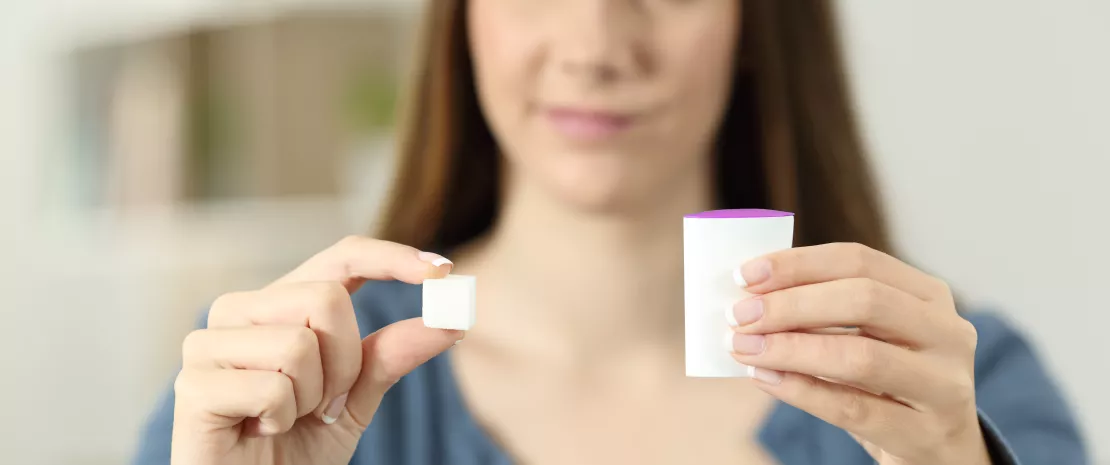
Somewhat controversial “light” products are once again under the spotlight. A recent European study suggests that sweeteners, when part of a balanced, low-sugar diet, may help facilitate weight loss without harming health or gut microbiota.

The power of your gut
Our marvelous microbiota
My microbiota as a woman
  • Learn all about microbiota
    • The gut microbiota
    • The ENT microbiota
    • The pulmonary microbiota
    • The urinary microbiota
    • The skin microbiota
    • The vaginal microbiota
    • The exposome
  • Microbiota and related conditions
    • Digestive disorders
    • Women disorders
    • Metabolic disorders
    • Skin disorders
    • Pediatric disorders
    • Psychiatric disorders
    • Neurological disorders
    • Respiratory disorders
    • Urinary disorders
  • Act on your microbiota
    • Probiotics
    • Prebiotics
    • Fecal Microbiota Transplant
    • Diet
  • Publications
    • News
    • Thematics folders
    • Thematic pages
    • Microbiota Q & A
    • Patients Stories
    • Experts' point of view
    About the Institute

    Join the microbiota community

    • Facebook
    • Twitter
    • LinkedIn
    • YouTube
    • Instagram
    • Bluesky
  • About the Institute
    • About us
    • International Microbiota Observatory
    • Microbiotalks
    • Press room
    • Partnerships

Healthcare professionals section

Find here your dedicated section
Biocodex logo

Sources

This article is based on scientific information

Sharing is caring

Your friends might be interested in this topic. Why not share it?

  • Facebook
  • Twitter
  • Mail

About this article

Created 11 February 2026
Updated 18 February 2026

Can “light” products that use sweeteners help us lose weight? Opinions and scientific data differ and there is no clear answer to this question: some say they are harmful to health and microbiota, others that they are harmless, and others still that they are beneficial.

With more than a billion people obese and 43% of adults overweight worldwide1, the question has major implications.

Sweeteners: good or bad?

In a new study2, European scientists have attempted to provide some unequivocal answers. They studied the impact of sweetened products on weight loss maintenance, health (cholesterol, blood sugar, blood pressure, etc.), and microbiota.

For the study, they recruited 277 obese or overweight people who had recently lost an average of 10 kg following a 2-month low-calorie diet.
 

Taste without calories

Sweeteners are food ingredients that provide a sweet taste but have few or no calories and help us avoid the harmful effects of sugar (tooth decay, increased blood sugar, etc.)4.

  • “Intense” sweeteners include saccharin (E954), aspartame (E951), sucralose, acesulfame potassium (E950), and stevia extract, which are used in cookies, cakes, and beverages (sodas).
  • Polyols include maltitol (E965), isomalt (E953), lactitol (E966), mannitol (E421), sorbitol (E420), and xylitol (E967), which are often found in sugar-free confectionery, particularly chewing gum.

For 10 months, they were put on a balanced, healthy diet relatively low in sugary products, with less than 10% of energy derived from added sugars, as recommended by the World Health Organization.3 There were no restrictions on food quantity.

The participants were divided into two groups:

  • A “sweeteners” group in which all sweet foods and drinks contained sweeteners
  • A “sugar” group, in which these products contained real sugar.

The results?

No problematic effects

Firstly, all participants maintained a significant portion of their weight loss during the 10 months of eating without restriction, proving that a balanced diet helps us stay slim. However, the sweeteners group maintained an additional 1.6 kg of weight loss compared to the sugar group.

Secondly, their cardiometabolic health parameters improved temporarily, although the differences subsequently diminished. In any case, no harmful effects of sweeteners were observed.

07.11.2022 When sweeteners undermine blood sugar control and disrupt the microbiota Read more

Unexpected positive impact on microbiota

More interestingly, the microbiota of the sweeteners group was significantly enriched with bacteria that produce beneficial short-chain fatty acids ( (sidenote: Short chain fatty acids (SCFA) Short chain fatty acids (SCFA) are a source of energy (fuel) for an individual’s cells. They interact with the immune system and are involved in communication between the intestine and the brain. Silva YP, Bernardi A, Frozza RL. The Role of Short-Chain Fatty Acids From Gut Microbiota in Gut-Brain Communication. Front Endocrinol (Lausanne). 2020;11:25. ) ). In particular, the researchers noted the activation of certain metabolic pathways linked to better fat utilization and increased satiety. All these effects were potentially conducive to better weight control.

Only a few digestive symptoms (bloating, gas, loose stools, etc.) were observed in the sweeteners group.

For the authors, this study proves that the prolonged use of sweeteners as part of a healthy, low-sugar diet contributes to maintaining weight loss without any adverse effects on health or the gut microbiota.

Exciting!

When sodas harm your microbiota and your health

Find out more!
Sources

1. WHO

2. Pang MD, Kjølbæk L, Bastings JJAJ, et al. Effect of sweeteners and sweetness enhancers on weight management and gut microbiota composition in individuals with overweight or obesity: the SWEET study. Nat Metab. 2025 Oct;7(10):2083-2098.

3. WHO

4. Vidal

Tags
Overweight Dietary Nutrition Sugar Microbiome Flora

    See also

    Obésité et microbiote : une bactérie aggrave l’effet d’une alimentation riche en graisses Obesity and microbiota: A bacterium worsens the effect of a high-fat diet
    Almonds: a real boost for the gut microbiome of those with poor diet
    Created 11 February 2026
    Updated 18 February 2026

    About this article

    To know more about this topic.

    Main topic

    Diet

    Related microbiotas

    The gut microbiota
    The power of your gut

    Microbiotalk: short conferences on antimicrobial resistance

    Breaking the silence: a global conversation on antimicrobial resistance Antimicrobial resistance (AMR) is ...

    Find out more

    Antibiotic-associated diarrhea

    Antibiotics are a powerful tool in the fight against bacterial infections. While treatments sometimes appea...

    Find out more

    Probiotics

    Probiotics: essential information for understanding and choosing them correctly. What exactly are probiotic...

    Find out more

    Microbiotalk: "Break barriers and address taboos in women’s health"

    Breaking Barriers: A Bold Conversation on Women’s Health ...

    Find out more

    Microbiotalk: "World Microbiome Day"

    Understanding microbiota through science, society, and participation This special edition of Microbiotalk,...

    Find out more

    How our gut constantly talks to our brain

    Our gut, often called our “second brain”, owns 200 million neurons (enteric nervous system), hosts several ...

    Find out more

    When bacteria and parasites attack the gut microbiota

    Viruses are not the only causes of diarrhea: there are other enteric pathogens (microorganisms infecting th...

    Find out more

    Functional dyspepsia

    Despite its strange-sounding name, functional dyspepsia is a common digestive disorder. Characteristic symp...

    Find out more

    Latest news

    News
    27.01.2026

    Alcoholism: when the gut microbiota and the brain drink too much

    Read the article
    Actu GP Médicaments : les effets indésirables dus aux interactions avec le microbiote ?
    19.01.2026

    How painkillers train your gut bacteria for antibiotic resistance

    Read the article
    03.12.2020

    Post-diet weight gain: the microbiota’s anti-yo-yo effect

    Read the article
    01.12.2025

    Exposome: understanding how our environment shapes our microbiota

    Read the article
    19.12.2025

    Depression: when sodas ruin your gut flora and your mood

    Read the article
    Antibiotics: what impact on the microbiota and on our health?
    12.10.2022

    Antibiotics: what impact on the microbiota and on our health?

    Read the article
    Photo: Exhibition
    15.04.2024

    Exhibition: “Microbiota, the invisible coach"

    Read the article
    26.11.2025

    Our cognitive health on our plate... and in our microbiota!

    Read the article
    • Learn all about microbiota
      • The gut microbiota
      • The ENT microbiota
      • The pulmonary microbiota
      • The urinary microbiota
      • The skin microbiota
      • The vaginal microbiota
      • The exposome
    • Microbiota and related conditions
      • Digestive disorders
      • Women disorders
      • Metabolic disorders
      • Skin disorders
      • Pediatric disorders
      • Psychiatric disorders
      • Neurological disorders
      • Respiratory disorders
      • Urinary disorders
    • Act on your microbiota
      • Probiotics
      • Prebiotics
      • Fecal Microbiota Transplant
      • Diet
    • Publications
      • News
      • Thematics folders
      • Thematic pages
      • Microbiota Q & A
      • Patients Stories
      • Experts' point of view
      About the Institute

      Join the microbiota community

      • Facebook
      • Twitter
      • LinkedIn
      • YouTube
      • Instagram
      • Bluesky
    • About the Institute
      • About us
      • International Microbiota Observatory
      • Microbiotalks
      • Press room
      • Partnerships

    Healthcare professionals section

    Find here your dedicated section
    Biocodex logo
    The power of your gut
    Our marvelous microbiota
    My microbiota as a woman
    • English
    • Français
    • Español
    • Portuguese
    • Polish

    Browse the site

    • Learn all about microbiota
      • The gut microbiota
      • The ENT microbiota
      • The pulmonary microbiota
      • The urinary microbiota
      • The skin microbiota
      • The vaginal microbiota
      • The exposome
    • Microbiota and related conditions
      • Digestive disorders
      • Women disorders
      • Metabolic disorders
      • Skin disorders
      • Pediatric disorders
      • Psychiatric disorders
      • Neurological disorders
      • Respiratory disorders
      • Urinary disorders
    • Act on your microbiota
      • Probiotics
      • Prebiotics
      • Fecal Microbiota Transplant
      • Diet
    • Publications
      • News
      • Thematics folders
      • Thematic pages
      • Microbiota Q & A
      • Patients Stories
      • Experts' point of view
      About the Institute

      Join the microbiota community

      • Facebook
      • Twitter
      • LinkedIn
      • YouTube
      • Instagram
      • Bluesky
    • About the Institute
      • About us
      • International Microbiota Observatory
      • Microbiotalks
      • Press room
      • Partnerships

    Healthcare professionals section

    Find here your dedicated section
    Biocodex logo

    Discover

    The power of your gut
    Our marvelous microbiota
    My microbiota as a woman

    Join the microbiota community

    • Facebook
    • Twitter
    • LinkedIn
    • YouTube
    • Instagram
    • Bluesky

    Healthcare professionals section

    Find here your dedicated section

    Redirection

    You are about to be redirected and leave our website

    • Be redirected
    • Stay on the Biocodex Microbiota Institute's website

    Stay with us !

    Join the microbiota community and receive "The Essentials" once a month to stay up to date with the latest news on the microbiota.

    * Mandatory Fields

    BMI 20-35

    Explore

    11.02.2026

    Can sweeteners help us lose weight and maintain a healthy gut microbiota?

    Read the article
    04.02.2026

    Why women with blood type A have a lower risk of preterm birth

    Read the article
    27.01.2026

    Alcoholism: when the gut microbiota and the brain drink too much

    Read the article

    Stay updated

    Join the Microbiota Community and receive once a month “The Essential” to stay up to date on the latest news about microbiota.

    * Mandatory Fields

    BMI 20-35

    • Learn all about microbiota
      • The gut microbiota
      • The ENT microbiota
      • The pulmonary microbiota
      • The urinary microbiota
      • The skin microbiota
      • The vaginal microbiota
      • The exposome
    • Microbiota and related conditions
      • Digestive disorders
      • Women disorders
      • Metabolic disorders
      • Skin disorders
      • Pediatric disorders
      • Psychiatric disorders
      • Neurological disorders
      • Respiratory disorders
      • Urinary disorders
    • Act on your microbiota
      • Probiotics
      • Prebiotics
      • Fecal Microbiota Transplant
      • Diet
    • Publications
      • News
      • Thematics folders
      • Thematic pages
      • Microbiota Q & A
      • Patients Stories
      • Experts' point of view
      About the Institute

      Join the microbiota community

      • Facebook
      • Twitter
      • LinkedIn
      • YouTube
      • Instagram
      • Bluesky
    • About the Institute
      • About us
      • International Microbiota Observatory
      • Microbiotalks
      • Press room
      • Partnerships

    Healthcare professionals section

    Find here your dedicated section
    Biocodex logo

    Discover

    The power of your gut
    Our marvelous microbiota
    My microbiota as a woman

    Healthcare professionals section

    Find here your dedicated section

    Join the microbiota community

    • Facebook
    • Twitter
    • LinkedIn
    • YouTube
    • Instagram
    • Bluesky

    © 2026 Biocodex. All rights reserved.

    • Legal notice
    • GTU
    • Data protection policy
    • Sitemap
    • Cookies settings
    • Digital accessibility : partially compliant
    Biocodex logo