


Chlorinated water and antibiotic resistance in infants: is there a link?
Chlorination helps control harmful microorganisms in drinking water. But could residual chlorine also affect infant gut microbiome and contribute to antibiotic resistance? A study involving 197 infants explored this question.1
- Learn all about microbiota
- Microbiota and related conditions
- Act on your microbiota
- Publications
- About the Institute
Healthcare professionals section
Find here your dedicated section
Sources
This article is based on scientific information
About this article
Antibiotic resistance is increasing worldwide and remains a major public health challenge. Between 2018 and 2023, more than 40% of the pathogen–antibiotic combinations monitored by the WHO showed increasing resistance.2 Efforts to address this issue have primarily focused on reducing antibiotic use and promoting vaccination to prevent infections. However, environmental factors may also play a role in the development of antibiotic resistance. Australian researchers investigated one such factor that has received relatively little attention: the consumption of chlorinated drinking water.
Nearly 2 out of 5 people have been informed by a healthcare professional that taking antibiotics could negatively affect the balance of their microbiome.
Only 1 out of 4 people reported receiving all the essential information about the microbiome when antibiotics were prescribed.
Chlorinated vs. filtered water: a 12-month study involving 197 infants
Chlorination disinfects drinking water, helps ensure its microbiological safety, and reduces the risk of gastrointestinal infections. Chlorine levels in drinking water are regulated, and the concentrations used in this study (0.3–1.1 mg/L) remained below the 5 mg/L limit. However, residual chlorine, which remains in tap water after disinfection, may affect infants’ gut environment by favoring bacteria carrying antibiotic resistance functions. To test this hypothesis, 197 six-month-old infants were randomly assigned to one of two groups for 12 months: one group received filtered tap water, from which chlorine and certain other chlorine-based disinfectants had been removed, while the other received conventional chlorinated tap water. Stool samples were collected at the beginning and end of the study to analyze the DNA of the microorganismses present in the gut.
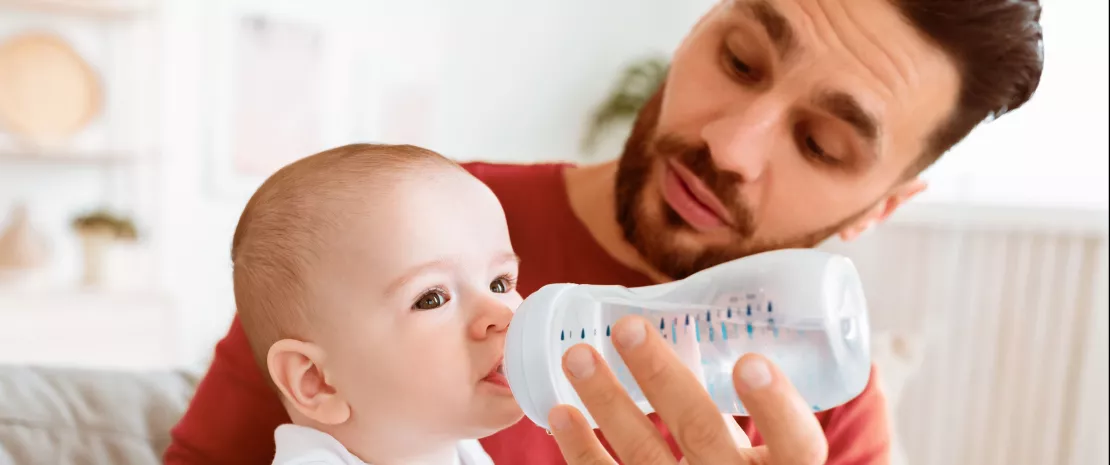
Tap water and baby bottles: what French health authorities recommend.⁴
Tap water can be used to prepare baby bottles, with a few precautions:
- Let the water run for a few seconds, use only cold water, and clean the tap aerator regularly.
- ANSES* advises against using home-filtered or softened water to prepare baby bottles, as these systems can promote the growth of microorganisms.
*ANSES: French Agency For Food, Environmental And Occupational Health & Safety.
An overall unchanged microbiome, but greater antibiotic resistance potential
Overall, the gut microbiota profiles of the two groups were similar, with no significant differences in bacterial content, diversity, or overall community structure. However, the group that drank chlorinated water had a more extensive resistome—that is, a greater abundance of functions associated with antibiotic resistance, including enzymes capable of breaking down antibiotics.3
An additional analysis suggested that this increase in antibiotic resistance functions may be more pronounced among children who both consumed chlorinated water and received antibiotics during the study. The authors therefore hypothesize that these two exposures may act together, potentially increasing the risk of selecting more resistant bacteria.
The set of antibiotic resistance genes carried by microorganisms within a given environment, in this case, the gut microbiota.3
Chlorine that remains in tap water after disinfection.
Should we stop drinking tap water?
These findings do not challenge the practice of drinking water chlorination, which has well-established health benefits. However, the authors concluded that chlorinated tap water could strengthen antibiotic resistance functions in the infant gut microbiota, although no associated clinical risk to infant health has yet been demonstrated. Further research is needed to determine whether adjusting the timing or method of introducing tap water could mitigate this effect and to assess its potential impact on children’ health, particularly for those exposed to multiple courses of antibiotics.
The study1 was partly funded by Water Corporation WA and received in-kind support from Pure Water Systems. Neither partner was involved in the study design, data analysis, or decision to publish.
1. Parkin K, Christophersen CT, Verhasselt V, et al. Chlorinated drinking water exposure enriches antimicrobial resistance pathways in the infant gut microbiome: a randomized trial. Commun Med. 2026;6:405. doi:10.1038/s43856-026-01626-2.
2. World Health Organization. WHO warns of widespread resistance to common antibiotics worldwide. Geneva: WHO; 13 October 2025. https://www.who.int/news/item/13-10-2025-who-warns-of-widespread-resistance-to-common-antibiotics-worldwide.
3. D'Costa VM, McGrann KM, Hughes DW, Wright GD. Sampling the antibiotic resistome. Science. 2006;311(5759):374-377. doi:10.1126/science.1120800.
4. ANSES. Biberon : comment le préparer et le conserver ? Maisons-Alfort : Anses ; article du 17/01/2013. https://www.anses.fr/fr/article/biberon-comment-preparer-conserver (consulté le 05/10/2026).
See also


