
About the Institute
  • English
  • Français
  • Español
  • Russian
  • Portuguese
  • Polish
  • Turkish
  • Ukrainian

Breadcrumb

  1. Home
  2. Gastroenterology
  3. Serotonin-producing lactobacilli promoting intestinal transit
  • Our publications
    • News
    • HCP Magazine
    • Thematic pages
    • Experts' point of view
    • Thematic folders
    • Overviews - Microbiota Magazine
  • About the Institute
    • About us
    • International Microbiota Observatory
    • Press room
    • Partnerships
  • Congresses
    • Congress calendar
    • Congress reviews
  • Continuing Medical Education
    • Accrediting courses
  • Useful documents
    • How to talk about
    • Infographics
    • Diagnosis tools
    • Patients Stories

    Join the microbiota community

    • Facebook
    • Twitter
    • LinkedIn
    • YouTube
    • Instagram
    • Bluesky

Lay public section

Find here your dedicated section

Gastroenterology
Gynecology
Pediatrics
General Medicine

Breadcrumb

  1. Home
  2. Gastroenterology
  3. Serotonin-producing lactobacilli promoting intestinal transit
Gastroenterology

Serotonin-producing lactobacilli promoting intestinal transit

Gut-brain axis
Gastrointestinal system Gut-brain axis

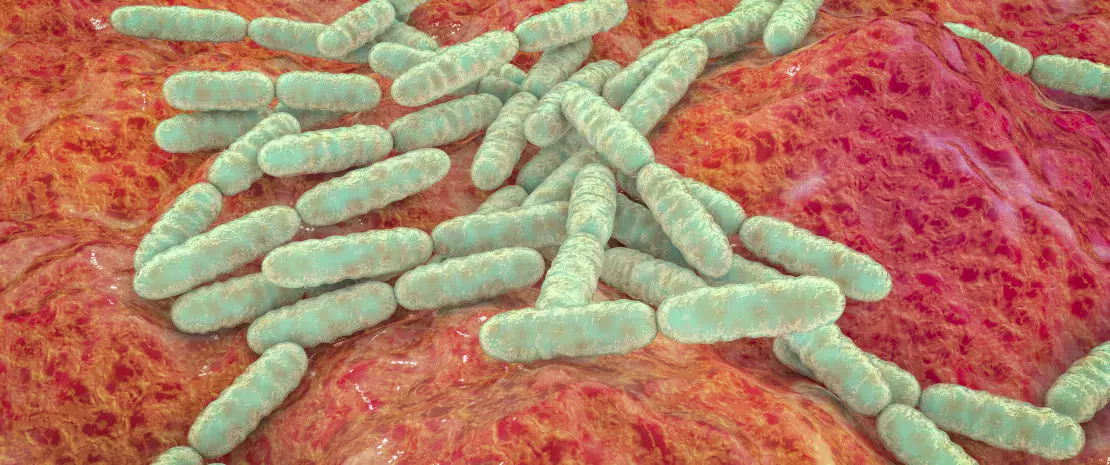
Certain strains of intestinal lactobacilli—Limosilactobacillus mucosae and Ligilactobacillus ruminis—produce bioactive serotonin that may contribute to intestinal health, improving colonic neuronal density and normalizing transit.

Gastroenterology
Gynecology
Pediatrics
General Medicine
  • Our publications
    • News
    • HCP Magazine
    • Thematic pages
    • Experts' point of view
    • Thematic folders
    • Overviews - Microbiota Magazine
  • About the Institute
    • About us
    • International Microbiota Observatory
    • Press room
    • Partnerships
  • Congresses
    • Congress calendar
    • Congress reviews
  • Continuing Medical Education
    • Accrediting courses
  • Useful documents
    • How to talk about
    • Infographics
    • Diagnosis tools
    • Patients Stories

    Join the microbiota community

    • Facebook
    • Twitter
    • LinkedIn
    • YouTube
    • Instagram
    • Bluesky

Lay public section

Find here your dedicated section

Sources

This article is based on scientific information

Sharing is caring

Your colleagues might be interested in this topic. Why not share it?

  • Facebook
  • Twitter
  • LinkedIn
  • Mail

About this article

Created 14 January 2026
Updated 15 January 2026

Serotonin is essential to the digestive system: it regulates essential gastrointestinal functions (peristalsis, vasodilation, visceral sensitivity) and promotes the development and maintenance of the enteric nervous system. Although serotonin production is mainly endogenous (in two stages: tryptophan -> 5-HTP -> serotonin), certain human enteric bacteria are suspected of contributing to it. Scientists have recently identified these bacteria and evaluated the physiological activity of this microbial serotonin on colonic innervation and intestinal motility.

95% Approximately 95% of the body's serotonin pool comes from the intestine, where it is synthesized, stored, and released by enterochromaffin cells.

Serotonin-producing lactobacilli

The results confirm that the gut microbiota synthesizes serotonin and contributes to intestinal levels of this substance: in vitro (anaerobic cultures), the human fecal microbiota of healthy volunteers produces serotonin; in vivo, serotonin is found in the stools of mice that are genetically incapable of synthesizing it once they are given microbiota. Which bacteria are responsible? Researchers have identified a pair of serotonin-producing lactobacilli (named Ls), consisting of Ligilactobacillus ruminis and Limosilactobacillus mucosae. Ls does not produce 5-HTP or serotonin from tryptophan (step 1 of synthesis), but produces serotonin in the presence of 5-HTP (step 2). This step 2 of decarboxylation of 5-HTP to serotonin requires the simultaneous presence of both bacteria in the consortium.

10.10.2024 Gut bacteria turn stress hormones into progestins hormones: a surprising role for hydrogen gas Read more

Effects of intestinal colonization by the bacterial duo

In axenic mice unable to produce endogenous serotonin, colonization by Ls strains alone increases entero-serotonin levels, promotes colonic innervation, and increases the number of serotonin-immunoreactive neurons. However, serum serotonin levels in mice are unchanged, suggesting that bacterial serotonin primarily regulates local intestinal functions.

The isolated Ls community produces serotonin in vitro. However, this effect is not reproduced in culture conditions with pure strains (L. mucosae or L. ruminis) or with their reconstituted co-culture, whereas this co-culture increases fecal serotonin in vivo. This suggests that microbial serotonin production may depend on specific intestinal conditions (substrates, pH, oxygen, cofactors, microbial interactions).

Enterochromaffin cells in mammals synthesize serotonin in two steps from the aromatic amino acid tryptophan (Trp):

1. Hydroxylation of Trp produces the serotonin precursor 5-hydroxytryptophan (5-HTP). Tryptophan hydroxylases (TPH), belonging to the larger family of aromatic amino acid hydroxylases (AAAH), carry out this first, rate-limiting step in serotonin synthesis. 

2. 5-HTP is then decarboxylated by aromatic amino acid decarboxylases to form serotonin.

Restoring patients' intestinal motility?

Finally, Ls normalizes intestinal transit time in axenic mice. However, in patients with irritable bowel syndrome, the fecal abundance of L. mucosae (but not L. ruminis) is significantly lower than in healthy controls. And the less this bacterium is present, the harder the stools are. Could a mechanism linked to the microbiota affect local serotonin biosynthesis and intestinal motility in these patients? According to the authors, future research could determine whether these serotonin-producing bacteria are capable of restoring physiological serotonin levels in patients with intestinal motility disorders.
 

Gut-brain axis: gut microbiota as a mediator of stress response

Download the infographic!
Source

Moretti CH, Grasset E, Zhu J et al. Identification of human gut bacteria that produce bioactive serotonin and promote colonic innervation. Cell Rep. 2025 Oct 28;44(10):116434.

Tags
Microbiome Flora Serotonin Gut-brain axis Gut Gut microbiota Gastrointestinal system Gastroenterology

    See also

    Gut–mind–pelvic axis: new insights from microbiome science
    The antidepressant effect of citrus: a matter of gut bacteria?
    Created 14 January 2026
    Updated 15 January 2026

    About this article

    To know more about this topic.

    Main topic

    Gut-brain axis

    Medical practice

    Gastrointestinal system Gut-brain axis

    Content type

    News
    Gastroenterology

    Antimicrobial resistance fresco: learn, play and act now

    The Antimicrobial resistance fresco is an interactive and educational experience that raises awareness abou...

    Find out more

    Resilience of healthy adult gut microbiota following antibiotic exposure

    Commented articles - Adults' section By Pr. Harry Sokol ...

    Find out more

    Probiotics: what exactly are we talking about?

    From the Latin pro and Greek bios meaning “for life”, the term “probiotic” was suggested over 60 years ago,...

    Find out more

    Association between fungal dysbiosis and environment

    The fungal portion of the gut microbiota (or mycobiota) has been much less studied than the bacterial porti...

    Find out more

    Your IBS Diagnosis Check List

    How many patients suffering from gut disorder do you see per week? How many are diagnosed with Irritable Bo...

    Find out more

    How do you choose a probiotic for your patient?

    Faced with a plethora of products on the market, it's not always easy for health professionals to suggest a...

    Find out more

    The Janus face of Antibiotics: Life Savers and Microbiota Disruptors

    A page turns: with the advent of antibiotics in the 20th century, this type of therapy, despite its undoubt...

    Find out more

    Fecal transplantation - ready for prime time?

    Congress review By Pr. Danny De Looze Department of Gastroenterology University Hospital Gent, Belgium ...

    Find out more

    Continue reading

    News
    Photo HCPs: AMR page for the 2025 WAAW campaign
    08.10.2025

    Everything you need to know about antibiotics and antimicrobial resistance

    Read the article
    04.12.2025

    This one gut microbe could change the way cancer therapy performs

    Read the article
    26.11.2025

    Anti-inflammatory diet and cognitive impairment: role of the oral and gut microbiota

    Read the article
    28.01.2025

    How to rebuild my gut microbiota after taking antibiotics?

    Read the article
    29.08.2023

    Massive amounts of antibiotic resistance genes found in clouds

    Read the article
    09.02.2022

    Antimicrobial resistance genes “stowaway” in gut microbiota during international travel

    Read the article
    08.01.2024

    When travel breeds antibiotic resistance

    Read the article
    08.03.2024

    Revolutionizing Infection Control: FMT's Role in Combatting Multidrug-Resistant Organisms in Transplant Patients

    Read the article
    • Our publications
      • News
      • HCP Magazine
      • Thematic pages
      • Experts' point of view
      • Thematic folders
      • Overviews - Microbiota Magazine
    • About the Institute
      • About us
      • International Microbiota Observatory
      • Press room
      • Partnerships
    • Congresses
      • Congress calendar
      • Congress reviews
    • Continuing Medical Education
      • Accrediting courses
    • Useful documents
      • How to talk about
      • Infographics
      • Diagnosis tools
      • Patients Stories

      Join the microbiota community

      • Facebook
      • Twitter
      • LinkedIn
      • YouTube
      • Instagram
      • Bluesky

    Lay public section

    Find here your dedicated section
    Gastroenterology
    Gynecology
    Pediatrics
    General Medicine
    • English
    • Français
    • Español
    • Russian
    • Portuguese
    • Polish
    • Turkish
    • Ukrainian

    Browse the site

    • Our publications
      • News
      • HCP Magazine
      • Thematic pages
      • Experts' point of view
      • Thematic folders
      • Overviews - Microbiota Magazine
    • About the Institute
      • About us
      • International Microbiota Observatory
      • Press room
      • Partnerships
    • Congresses
      • Congress calendar
      • Congress reviews
    • Continuing Medical Education
      • Accrediting courses
    • Useful documents
      • How to talk about
      • Infographics
      • Diagnosis tools
      • Patients Stories

      Join the microbiota community

      • Facebook
      • Twitter
      • LinkedIn
      • YouTube
      • Instagram
      • Bluesky

    Lay public section

    Find here your dedicated section

    Discover

    Gastroenterology
    Gynecology
    Pediatrics
    General Medicine

    Join the microbiota community

    • Facebook
    • Twitter
    • LinkedIn
    • YouTube
    • Instagram
    • Bluesky

    Lay public section

    Find here your dedicated section

    Redirection

    You are about to be redirected and leave our website

    • Be redirected
    • Stay on the Biocodex Microbiota Institute's website

    Stay with us !

    Join the Microbiota Community of HCPs and researchers and receive “Microbiota Digest” and "HCP Magazine" to stay up to date on the latest news about microbiota.

    * Mandatory Fields

    BMI 20-35

    Explore

    14.01.2026

    Serotonin-producing lactobacilli promoting intestinal transit

    Read the article
    Photo: Le microbiote vaginal, réservoir de gènes de  résistance aux antibiotiques
    19.12.2025

    The vaginal microbiota, a reservoir of antibiotic resistance genes

    Read the article
    04.12.2025

    This one gut microbe could change the way cancer therapy performs

    Read the article

    Stay updated

    Join the Microbiota Community of HCPs and researchers and receive “Microbiota Digest” and "HCP Magazine" to stay up to date on the latest news about microbiota.

    * Mandatory Fields

    BMI 20-35

    • Our publications
      • News
      • HCP Magazine
      • Thematic pages
      • Experts' point of view
      • Thematic folders
      • Overviews - Microbiota Magazine
    • About the Institute
      • About us
      • International Microbiota Observatory
      • Press room
      • Partnerships
    • Congresses
      • Congress calendar
      • Congress reviews
    • Continuing Medical Education
      • Accrediting courses
    • Useful documents
      • How to talk about
      • Infographics
      • Diagnosis tools
      • Patients Stories

      Join the microbiota community

      • Facebook
      • Twitter
      • LinkedIn
      • YouTube
      • Instagram
      • Bluesky

    Lay public section

    Find here your dedicated section

    Discover

    Gastroenterology
    Gynecology
    Pediatrics
    General Medicine

    Lay public section

    Find here your dedicated section

    Join the microbiota community

    • Facebook
    • Twitter
    • LinkedIn
    • YouTube
    • Instagram
    • Bluesky

    © 2026 Biocodex. All rights reserved.

    • Legal notice
    • GTU
    • Data protection policy
    • Sitemap
    • Cookies settings
    • Digital accessibility : partially compliant
    Biocodex logo