

Magazine
Image
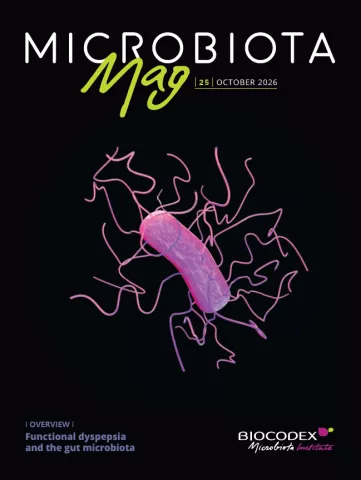
Microbiota 25 - October 2026
Dear readers,
Have you ever stopped to consider these questions: how many patients with persistent upper gastrointestinal symptoms do you see each week? And how many of them remain undiagnosed with functional dyspepsia (FD)?
Functional dyspepsia affects around 10% of adults worldwide, yet it can still be challenging to diagnose. Postprandial fullness, early satiety, epigastric pain or burning… its symptoms can overlap with those of gastroesophageal reflux disease, gastroparesis, or irritable bowel syndrome. This clinical overlap can, quite simply, make the diagnosis difficult to pin down.
But functional dyspepsia also illustrates how our understanding of gastrointestinal disorders is evolving. Now recognized as a disorder of gut–brain interaction, it can no longer be reduced to a single dysfunction of the stomach. Altered motility, visceral hypersensitivity, impaired duodenal barrier and immune function, psychosocial factors and, increasingly, the microbiota: the mechanisms involved reveal a complex condition at the crossroads of the gastrointestinal tract, the immune system, and the brain.
In this issue’s review, Professor Lucas Wauters helps us unravel this complexity and better understand how emerging evidence on the duodenum and its microbiota is reshaping our understanding of the pathophysiology of functional dyspepsia and opening up new therapeutic perspectives. He also examines the recent changes introduced by the Rome V criteria, particularly in the definition and classification of different patient profiles.
Because changes in diagnostic criteria can sometimes represent far more than a shift in terminology: they can reflect a new way of recognizing symptoms, characterizing patients more accurately and, potentially, guiding their management more effectively.
That is precisely the purpose of Microbiota Mag: to identify, amid a constantly evolving scientific landscape, the advances that challenge established thinking, sharpen diagnosis and, ultimately, improve the care of your patients.
Enjoy your reading!
Lay public section
Find here your dedicated section
Created
09 November 2026
Updated
09 November 2026